
Complete List of TapSwap Codes for Nigeria 2024
Discover all TapSwap codes for discounts across retail, transport (including danfo & okada), and mama put meals in Nigeria 🇳🇬. Save ₦ on everyday essentials now!
Edited By
Olivia Edwards
Tapswap is officially scheduled to launch on 15 July 2024, an event that holds considerable promise for Nigeria's fast-growing digital economy. Positioned as a cutting-edge peer-to-peer (P2P) digital payment platform, Tapswap aims to enhance convenience and security in peer transactions at a time when fintech adoption is sharply rising across the country.
Unlike traditional payment apps, Tapswap is designed to serve not just urban centres but also smaller towns and rural communities where access to banking infrastructure remains limited. Its core features include instant fund transfers via QR codes, seamless integration with existing bank accounts, and an easy-to-use wallet supporting multiple currencies including the naira. For traders and entrepreneurs, this means faster payment reconciliations without depending heavily on cash or POS terminals that frequently malfunction due to power outages.
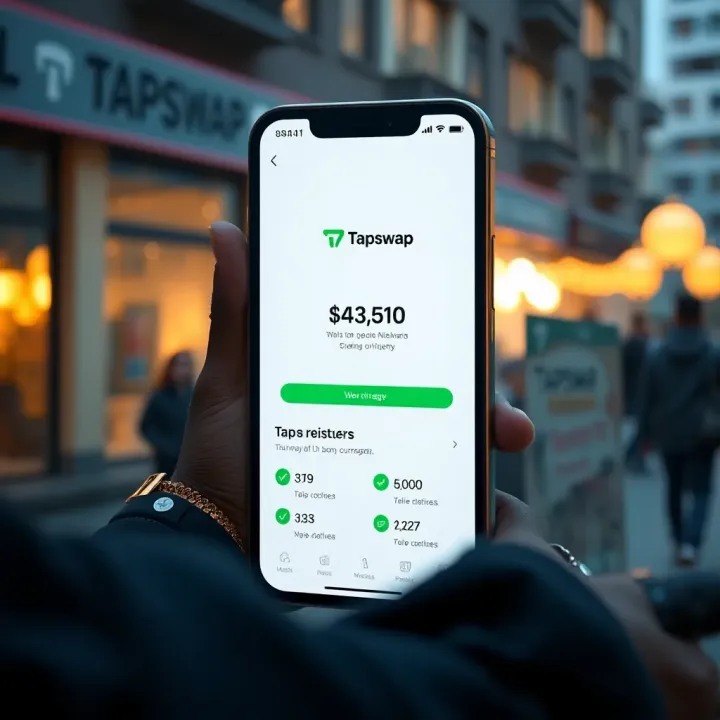
The launch of Tapswap represents more than just another fintech entrant; it offers an innovative approach that could redefine how daily transactions and remittances happen across Nigeria. This is especially relevant given the dash for cashless solutions amid rising generator and fuel costs.
For investors and market analysts, Tapswap’s entry signals intensified competition in digital payments but also opens pathways for collaboration with existing players such as Paystack, Flutterwave, and OPay. Its planned use of AI-driven fraud detection and blockchain verification protocols could set new benchmarks in security and transparency. Entrepreneurs stand to benefit by integrating Tapswap’s API into their e-commerce, subscription, and logistic platforms, unlocking smoother cash flows and potentially reducing operational hiccups.
With the platform’s debut expected to coincide with Nigeria’s ember months—a period notorious for increased financial activity and expenses—Tapswap could gain rapid traction as new users seek reliable digital alternatives. The next few months will be pivotal in observing how this platform navigates issues like network reliability, user adoption in less connected areas, and regulatory requirements posed by the Central Bank of Nigeria (CBN).
Overall, the 15 July launch sets the stage for Tapswap not just as a service, but as a catalyst for deeper financial inclusion and digital ecosystem maturity across Nigeria.
Tapswap is a new digital platform designed to simplify and enhance transactions within Nigeria’s growing fintech environment. Unlike regular payment apps, Tapswap focuses on peer-to-peer exchanges and easy swaps between services and goods, making it especially handy for traders and entrepreneurs who depend on quick, reliable payments. For instance, a small trader at a busy market in Lagos can use Tapswap to accept payments directly from customers without the usual delays tied to bank transfers or POS terminals.
The platform integrates mobile technology with secure transaction protocols, allowing users to complete exchanges swiftly using just their phones. This approach aligns perfectly with Nigeria’s high mobile penetration rate, providing a digital alternative that fits into everyday business activities without the need for expensive hardware.
Tapswap primarily serves individuals and businesses that thrive on quick, small-scale transactions. This includes market traders, artisans, and startups who don’t always have access to traditional banking infrastructure or find current systems cumbersome and expensive. Consider a roadside food vendor (mama put) in Abuja who needs an affordable and secure way to receive payments from customers paying with different bank apps; Tapswap caters directly to this need.
Beyond informal traders, Tapswap also aims at digital entrepreneurs and SMEs who want to reduce transaction costs and speed up cash flow. This target group often experiences delays due to naira volatility, network issues, or platform incompatibility. Tapswap’s user-friendly interface and commitment to security provide a practical solution, making digital payments more accessible and less frustrating.
Tapswap is set to bridge the gap between traditional cash transactions and fully digital payments, especially for users sidelined by existing fintech platforms.
By understanding Tapswap’s role, traders and investors can better grasp its potential to disrupt conventional payment habits in Nigeria. This knowledge is crucial for anyone interested in the future of Nigeria’s digital economy and how innovative tools can drive financial inclusion across sectors.
Understanding the official launch date of Tapswap is vital for traders, investors, and entrepreneurs keen on Nigeria’s fintech space. This date marks the platform’s formal entry into the market, signalling when its services become broadly available to the public. Knowing the timeline allows stakeholders to plan investment decisions, partnerships, and business strategies around Tapswap’s rollout.
Tapswap was officially announced by its developers on 15 March 2024, setting the launch date for 1 June 2024. This three-month lead time offers the fintech community a clear window to prepare. From investors’ perspective, the announcement acts as a signal to assess market readiness and potential demand for Tapswap’s offerings. It also shapes competitors' responses as they anticipate service disruptions or new opportunities.

Moreover, the scheduled launch creates practical benefits for users who expect a reliable date for onboarding. Businesses planning to integrate Tapswap’s payment solutions can align their internal systems ahead of this date to ensure seamless adoption. The platform intends to start operations gradually, focusing first on key metropolitan areas like Lagos, Abuja, and Port Harcourt, where digital payment penetration is higher.
Ahead of the launch, Tapswap has engaged in extensive pre-launch activities, including closed beta testing with select partners. These tests aim to identify and address issues in real-time, ensuring the platform handles transaction volumes typical of Nigerian markets. For instance, feedback from beta users in Lagos highlighted user interface quirks, which have since been refined to suit local preferences.
The pre-launch phase also involves merchant onboarding and training workshops. This groundwork prepares vendors — from mama puts in suburban areas to larger retailers — to use Tapswap’s system effectively from day one. Such preparation is essential to reduce downtime and foster trust among users who are wary of new fintech services.
For investors and market watchers, the pre-launch progress offers early indicators of Tapswap’s potential success or challenges, making this phase critical for informed decision-making.
To summarise, the official announcement and varying pre-launch activities not only build anticipation but also lay a solid foundation for Tapswap’s full rollout. Understanding these phases helps stakeholders position themselves strategically in Nigeria’s evolving digital payments ecosystem.
Tapswap arrives in Nigeria’s fintech scene with practical features designed to serve traders, investors, and entrepreneurs more efficiently. Its capabilities focus on ease of use, security, and versatility—qualities critical in Nigeria’s fast-growing but often fragmented digital landscape.
Tapswap’s interface stands out by combining simplicity with sophistication. The dashboard offers real-time tracking of transactions and portfolio performance, enabling users like brokers and investors to monitor market movements easily. Unlike many complex platforms, Tapswap caters to Nigerians with varying digital skills, ensuring the platform remains accessible without compromising functionality.
One useful feature is the ability to swap digital assets instantly, eliminating the usual delays experienced on other platforms. For example, a trader in Lagos can convert cryptocurrencies to naira or other digital assets seamlessly during market hours, improving liquidity and speed of investment decisions.
The design also accounts for mobile usage, critical in Nigeria where many access the internet primarily through smartphones. Tapswap optimises for low bandwidth, reducing loading times even in areas with unstable connections, an edge over many current fintech apps.
Security is a cornerstone of Tapswap’s offering, especially given the prevalence of cyber threats in Nigeria’s online space. The platform employs multi-factor authentication (MFA) to safeguard accounts, alongside end-to-end encryption for all transaction data. This means every swap, transfer, or investment action is shielded from interception.
Moreover, Tapswap complies with Nigerian financial regulations, adhering strictly to Central Bank of Nigeria (CBN) guidelines and the Securities and Exchange Commission (SEC) rules. This includes Know Your Customer (KYC) and Anti-Money Laundering (AML) protocols to curb fraudulent activities, separating Tapswap from less regulated competitors.
For instance, before a user can initiate large transactions or access certain investment features, the platform verifies identity and transaction legitimacy. This proactive stance protects both the users and the platform’s integrity.
Security and ease of use are non-negotiable in fintech. Tapswap addresses both, aiming to build trust and widen digital adoption across Nigeria’s demographic and economic spectrum.
In sum, Tapswap’s blend of user-friendly design and strong security measures positions it as a reliable and practical option for Nigeria's digital finance market. Traders and investors seeking speed, safety, and smart interfaces will find these features attractive, helping Tapswap carve a distinct place among fintech platforms.
Understanding market potential and competitive position is vital when evaluating Tapswap’s impact on Nigeria's digital ecosystem. This section examines how well the platform can capture demand and stand out amidst fintech giants. For traders, investors, and entrepreneurs, recognising these factors helps gauge growth, risks, and strategic opportunities.
Nigeria’s fintech sector has exploded in the past decade, driven by rising smartphone penetration and a youthful tech-savvy population. Platforms like Paystack, Flutterwave, and OPay have established extensive payment networks serving millions daily. Despite this growth, many Nigerians remain financially underserved, particularly in rural areas and informal sectors. This gap creates ample room for newer players like Tapswap to introduce innovative solutions.
The ecosystem's strength lies in its diversity, spanning mobile money, lending, investment, and remittance services. However, challenges such as inconsistent power supply, fluctuating internet connectivity, and regulatory grey areas persist. Tapswap’s success will depend on navigating these local realities while addressing unmet needs. For example, enabling offline transaction capabilities or integrating local agents could set Tapswap apart.
Tapswap aims to carve a niche by offering tailored services that respond directly to Nigerian user habits. Unlike giants such as Paystack, which focus heavily on e-commerce, or OPay’s broad range including transport and food delivery, Tapswap appears to prioritise seamless digital payments combined with grassroots financial inclusion.
A key competitive advantage would be its user experience and cost structure. Many Nigerians still find bank and fintech transaction fees steep, especially for small-value payments. If Tapswap reduces or eliminates such barriers, it can capture a significant segment of everyday consumers and small businesses.
Moreover, security features and compliance with Central Bank of Nigeria (CBN) regulations will influence trust and adoption. For instance, integration with Bank Verification Number (BVN) systems and adherence to Anti-Money Laundering (AML) protocols are non-negotiable.
Given the crowded fintech market, Tapswap’s ability to align with local financial behaviours and regulatory expectations will determine if it merely joins the pack or sets a new standard.
In brief, understanding Tapswap’s market potential and competitive edge requires looking beyond flashy features to how well it fits Nigeria’s unique financial environment. For stakeholders, this means assessing scalability, user adoption likelihood, regulatory alignment, and differentiation from established players to make informed decisions.
This section sheds light on the major obstacles and future paths for Tapswap as it enters Nigeria’s dynamic digital scene. Understanding these challenges and prospects is vital for traders, investors, and entrepreneurs keen on the fintech space. It also helps identify practical ways Tapswap can scale and sustain growth despite existing limitations.
Nigeria’s infrastructure remains a significant hurdle for fintech platforms. Though internet penetration has improved, many regions still face unreliable connectivity and frequent power outages, which could affect Tapswap’s user experience, particularly outside urban centres like Lagos or Abuja. For instance, users in underserved states may struggle to access seamless digital payments without stable 4G or electricity.
On the regulatory front, Tapswap must navigate Nigeria’s complex financial regulations enforced by bodies like the Central Bank of Nigeria (CBN) and the Securities and Exchange Commission (SEC). Compliance with anti-money laundering rules and data protection laws is non-negotiable. The recent tightening of fintech licensing by the CBN means Tapswap needs to secure proper certifications before full rollout, or risk penalties that could derail growth.
A practical example is Kuda Bank’s ongoing tussle with regulatory reviews, which slowed some of its expansion phases. Tapswap should learn from such scenarios, engaging regulators early to smooth out concerns and demonstrating adherence to standards.
Despite these challenges, Tapswap’s growth prospects are robust given the enormous demand for efficient digital payment solutions in Nigeria. The platform can leverage emerging technologies like USSD integration and QR payments to reach even users without smartphones, expanding its footprint into rural areas. This is crucial since a significant portion of Nigeria’s population still transacts with basic phones.
Regional expansion across West Africa presents another avenue. With ECOWAS gradually harmonising digital finance policies, Tapswap could consider tapping these neighbouring markets over time, mirroring the strategy of Paystack and Flutterwave which began locally but quickly went regional.
Moreover, partnerships with local merchants, telcos, and banks can drive user adoption and create a more resilient ecosystem. For entrepreneurs and investors, these alliances are important indicators of long-term viability.
The key for Tapswap is balancing aggressive growth ambitions with steady compliance and infrastructure improvements, ensuring it offers reliable services while scaling.
To summarise, while infrastructural challenges and regulatory complexities will test Tapswap’s resilience, careful navigation combined with innovation and strategic expansion could establish it as a frontline player in Nigeria’s fintech revolution.
Discover all TapSwap codes for discounts across retail, transport (including danfo & okada), and mama put meals in Nigeria 🇳🇬. Save ₦ on everyday essentials now!

Explore how vital markets shape Nigeria's economy 🇳🇬, their key roles, challenges they face, and ways to boost them for steady growth 📈.

Discover what HODL means in crypto and why holding crypto assets matters in Nigeria. Learn its origins, benefits, risks, and how it compares to other investment strategies 📈💡

📊 Get the latest on Dollar to Rand exchange rate trends, their impact on Nigerian traders, travellers, and businesses amid global and regional economic shifts 🌍
Based on 6 reviews