
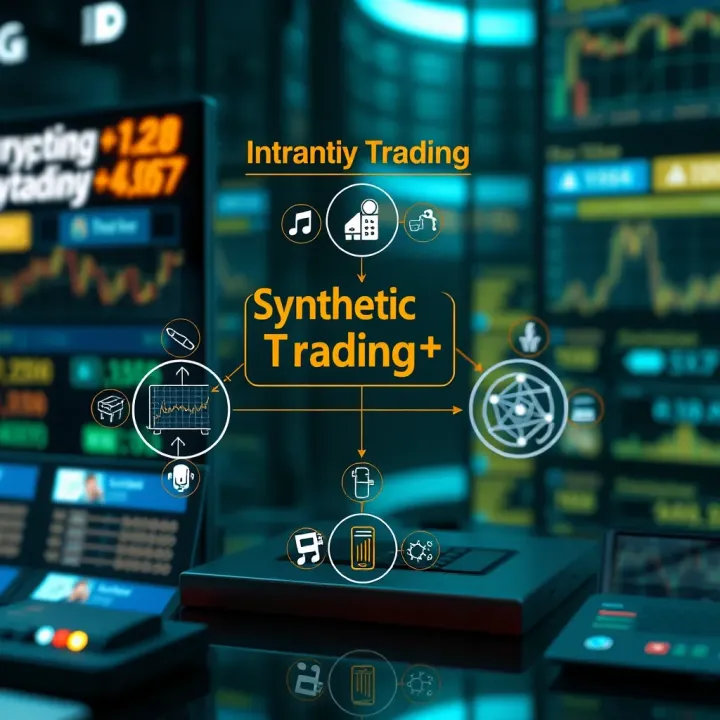
Understanding Synthetic Trading: Key Concepts & Uses
Explore synthetic trading concepts & applications 📈. Learn how Nigerian traders use synthetic positions to manage risks & maximize opportunities in markets.
Edited By
Isabella Hughes
Synthetic trading allows investors to mimic the return and risk profile of an asset without actually owning it. This practice has gained traction across global markets and is now increasingly relevant for Nigerian traders and investors looking for flexible exposure options.
At its core, synthetic trading works by combining financial instruments such as options, futures, swaps, or contracts for difference (CFDs) to create a position that behaves like owning stocks, bonds, or commodities. For example, instead of buying shares in a Nigerian bank, an investor might enter a synthetic position using derivatives that replicate that bank’s stock performance.

Synthetic trading provides alternative pathways to access markets, often at lower capital requirements, but it comes with distinct risks that traders must carefully manage.
Unlike direct ownership, synthetic positions don't confer voting rights or dividend claims. Still, traders favour them for hedging against price movements or speculating on market directions without committing large sums upfront. This strategy is particularly useful in markets where direct ownership may be costly or illiquid.
Cost Efficiency: Enter positions with less capital than outright asset purchase.
Flexibility: Combine instruments to tailor exposure and hedge risks.
Access: Trade certain assets otherwise hard to obtain locally.
Leverage Opportunities: Amplify potential gains (and losses) with derivatives.
However, synthetic trading demands better understanding and discipline. Risks include counterparty failure, leverage magnification, and regulatory complexities—especially in Nigeria where derivatives markets are still developing. Brokers and platforms offering synthetic products vary widely in reliability and costs.
For those navigating this terrain, mastering the mechanics of synthetic strategies and staying updated on Nigerian Securities and Exchange Commission (SEC) guidelines is crucial. Proper risk management — including setting stop-losses and monitoring exposure — helps prevent significant losses.
This article will unpack synthetic trading’s structures, common strategies, benefits, and regulatory context to equip Nigerian market participants with practical insights for smarter decisions.
Synthetic trading represents an approach where investors create positions that copy the behaviour of an underlying asset without actually owning it. This method matters because it opens doors for traders and investors to interact with markets in ways that traditional ownership doesn't allow. For instance, rather than buying shares in a Nigerian company like MTN, a trader can build a synthetic position that mirrors MTN’s price movements using options or futures. This flexibility lets market participants manage risk, speculate, or gain exposure to assets they might otherwise find difficult or expensive to acquire.
Synthetic positions effectively replicate the performance of an asset by combining different financial instruments. Imagine you want exposure to Zenith Bank shares’ price changes without purchasing the shares directly. By combining options contracts—say, a call and a put option—you can mimic the gains and losses of owning the shares. This strategy offers practical benefits, such as reduced capital requirements and the potential to tailor risk exposure precisely. Traders in the Nigerian market can use these setups to hedge against volatile naira exchange rates or fluctuating equity prices without committing large upfront cash.
Key financial instruments in synthetic trading include options, futures, and swaps. Options give the right, but not the obligation, to buy or sell an asset at a specific price within a timeframe. Futures contracts require the holder to buy or sell an asset at a future date at a predetermined price. Swaps are agreements to exchange cash flows, often used to manage interest rate or currency risk. Each tool plays a unique role in constructing synthetic positions by allowing traders to mix and match exposures. For instance, a swap might help a Nigerian importer hedge foreign currency risk without owning actual dollars.
The key difference lies in ownership versus exposure. Traditional investing involves buying the underlying asset, such as shares or bonds, granting rights like voting or dividends. Synthetic trading, on the other hand, focuses solely on price exposure without ownership rights. This means you can benefit from price movements without the hassles or costs of holding the actual asset, like paying dividends or needing custody services. However, this also means you miss out on certain benefits, such as shareholder voting or dividends, unless specifically structured.
Synthetic trading offers more flexibility but with added complexity. Creating synthetic positions requires careful planning and understanding of multiple contracts and their interactions. Execution is often more technical, involving simultaneous trades in options, futures, or swaps to replicate desired exposures. This complexity can be a barrier for newcomers and demands detailed risk management. Still, for sophisticated investors and traders, this flexibility allows customised strategies—such as hedging a portfolio against naira depreciation using swaps, or speculating on market movements with limited capital.
Synthetic trading blends opportunity with complexity, providing access to markets and risk management tools that traditional investing cannot always offer.
By grasping these core concepts, traders and investors in Nigeria and beyond can navigate synthetic trading with greater confidence and build strategies suited to their goals and market conditions.
Synthetic trading relies heavily on a handful of key strategies that allow traders to replicate market positions without directly owning the underlying assets. These strategies give market participants in Nigeria and globally the chance to take directional bets, manage risk, and exploit pricing inefficiencies while often needing less capital upfront. Understanding how these strategies work is essential for traders, investors, and brokers looking to make the most of synthetic positions.
One common approach to synthetic trading involves combining call and put options to mimic the payoff of owning or shorting an asset. This is done by buying a call option and selling a put option at the same strike price and expiry date, creating a synthetic long position. This setup behaves similarly to owning the underlying stock but usually requires less capital and can be more flexible in terms of risk management. For example, a Nigerian trader bullish on MTN Nigeria shares might prefer this method to gain exposure without tying up the full purchase price.
Conversely, a synthetic short position arises by selling a call and buying a put option at the same strike. This combination allows traders to benefit from a decline in asset price without having to short-sell the actual shares, which may be restricted or costly in some Nigerian market segments. Both synthetic longs and shorts provide an alternative way to take directional views with options, thus broadening access beyond traditional trading limits.

Synthetic spreads mimic other complex positions by combining multiple options contracts to replicate payoffs similar to strategies like straddles, strangles, or butterfly spreads. These spreads allow traders to tailor risk-return profiles finely and are useful in volatile Nigerian markets where hedging needs vary widely. For instance, a spread might replicate a protective collar on a government bond position, helping a trader limit downside while maintaining upside potential.
Arbitrage opportunities arise when pricing inefficiencies occur between the synthetic position and the underlying assets. Traders watch for gaps where the synthetic long or short trades at a different value than the actual asset, creating chances for riskless profit. In Nigeria’s developing options market, these gaps can appear due to liquidity shortages or regulatory constraints, allowing sophisticated investors to capitalise if they act swiftly and with precise timing.
Synthetic trading strategies offer practical pathways to exposure and hedging in markets where direct ownership is costly or restricted. For Nigerian investors, mastering these strategies means more options to navigate local challenges like naira volatility and limited trading products.
By learning how synthetic longs, shorts, spreads, and arbitrage work, you’re better prepared to use these tools reasonably and effectively in modern financial markets.
Synthetic trading brings practical benefits to traders and investors, especially within volatile and dynamic markets like Nigeria’s. These advantages range from saving capital upfront to accessing complex markets otherwise difficult to enter. Understanding these can help market participants make smarter moves.
Lower upfront costs compared to buying assets outright: Synthetic trading uses derivatives such as options or futures, requiring only a fraction of the cash needed to buy the actual asset. For example, instead of spending ₦1 million to buy shares in a NSE-listed company, a trader might create a synthetic position via options contracts for significantly less. This is particularly useful in Nigeria where capital can be tight and access to lump sums tricky.
Margin use and capital efficiency: Synthetic positions often rely on margin trading, allowing investors to put down a small deposit relative to the position’s full value. This means they can multiply exposure without committing large sums, freeing up funds for other opportunities. However, it’s crucial to manage margin calls carefully, especially with naira volatility and possible local market liquidity squeezes.
Exposure to foreign assets and restricted securities: Many Nigerian traders find it difficult to directly buy foreign stocks, commodities, or restricted securities due to regulations or capital controls. Synthetic trading offers a workaround by replicating price movements through derivatives without actual ownership. For example, investors can gain exposure to US tech stocks or oil prices via Nigerian brokerage platforms offering synthetic CFDs.
Benefits for Nigerian traders and investors: This access broadens portfolio diversification options beyond local NSE equities or government bonds. Nigerians can hedge foreign exchange risks or participate in global market trends without transferring large funds abroad or dealing with cumbersome processes. It also lowers barriers for retail investors seeking global reach.
Tailoring hedge positions through synthetic setups: Synthetic instruments allow fine-tuned strategies to manage risk precisely. Traders can design hedges that protect against specific moves in asset prices or currency rates. For instance, a Nigerian exporter worried about naira depreciation might use options-based synthetic trades to lock in favourable exchange conditions without selling the underlying contracts outright.
Examples relevant to Nigerian market risks: Local markets face unique challenges like fuel price fluctuations, inflation spikes, and regulatory shifts. Synthetic trading lets investors hedge these sector-specific risks flexibly. A company reliant on diesel might use synthetic futures contracts to manage rising fuel costs indirectly, smoothing cash flow unpredictability.
Synthetic trading isn’t just about speculation; it’s a valuable tool for managing capital, accessing global markets, and protecting against local uncertainties. Nigerian investors stand to gain much by understanding and responsibly employing these strategies.
In all, these advantages make synthetic trading a practical choice, especially in a market with high volatility and capital restrictions like Nigeria’s, but success depends heavily on good knowledge and risk management.
Synthetic trading offers innovative ways to gain market exposure, but it also brings distinct risks that investors, traders, and brokers must understand. These risks involve the credibility of counterparties, liquidity challenges, technical complexities, potential mispricing, and regulatory compliance. In Nigeria’s evolving financial environment, reckoning with these factors is essential to safeguard investments and meet legal standards.
Dependence on counterparties' creditworthiness is the cornerstone risk in synthetic trading. Unlike buying a stock outright, synthetic positions often rely on a counterparty, such as a broker or financial institution, to honour contractual obligations. If these counterparties face financial trouble or default, investors may experience losses even if the underlying asset performs well. For example, if you enter a synthetic options contract through a smaller brokerage in Lagos with shaky finances, you risk not receiving your due payoff.
In the Nigerian context, where many brokerages and intermediaries are still adapting to advanced derivatives trading, counterparty risk is quite real. Traders must perform due diligence, evaluating the counterparty’s financial health, adherence to regulatory standards, and operational track record. Large, well-regulated banks and fintech platforms generally offer safer environments than smaller, less transparent players.
Liquidity issues in Nigerian and global markets also complicate synthetic trading. Synthetic positions depend on active markets for the underlying instruments, such as options or futures, to enter and exit trades at fair prices. Nigeria’s derivatives market is still developing, meaning liquidity can dry up quickly for certain contracts. This scarcity can widen bid-ask spreads, force unfavourable fills, or trap traders unable to close positions promptly.
Globally, liquidity varies widely between markets. While the US or European options markets enjoy deep pools of buyers and sellers, Nigerian traders face more concentrated market activity. For instance, during unstable naira periods or amid market jitters, liquidity narrows drastically, creating bigger slippages and potential losses.
The technical challenges in executing and managing synthetic positions stem from their layered nature. Synthetic trading requires combining multiple contracts, such as calls and puts, into complex structures that mimic ownership or other exposures. Accurately assembling and adjusting these positions takes skill and constant monitoring to avoid unintended risks.
For Nigerian investors new to derivatives, the steep learning curve poses substantial hurdles. Missteps in timing, contract selection, or margin management can turn a seemingly profitable position into a costly mistake. For example, failure to roll over an expiring options contract timely may leave you exposed or force liquidation.
Examples of mispricing pitfalls occur when synthetic positions fail to price accurately relative to the underlying asset due to market inefficiencies, volatility changes, or calculation errors. A synthetic long position might cost more than buying the actual stock, resulting in an arbitrage loss rather than gain.
A practical case in Nigeria involves synthetic exposure to NSE-listed equities via options. If volatility spikes unexpectedly without the investor adjusting premiums, they risk overpaying or holding a vulnerable position. Understanding Greeks like delta and theta becomes vital to managing these risks effectively.
Nigeria’s Securities and Exchange Commission (SEC) requires all players in derivatives and synthetic trading to comply with specific licensing, reporting, and conduct rules. This framework helps protect investors but also means participants must stay informed about evolving guidelines.
For example, brokers offering synthetic trading products must ensure clear client disclosures on risks and fees. Non-compliance can lead to penalties or suspension, which could disrupt trading activities and impact investor confidence.
On the international front, regulators like the US Securities and Exchange Commission and the European Securities and Markets Authority have stringent controls on synthetic products to address systemic risks and promote transparency. Global financial institutions operating in Nigeria often align with these standards to maintain cross-border legitimacy.
Understanding these regulatory environments helps Nigerian traders anticipate potential changes and align their strategies accordingly.
Navigating synthetic trading requires more than market savvy; it demands vigilance about counterparties, liquidity, technical complexities, and regulations. Being aware of these risks positions traders and investors for smarter, safer engagement in modern financial markets.
Counterparty default can wipe out gains despite asset performance
Limited liquidity in Nigeria causes price inefficiencies and trading delays
Complex structures require skillful management to avoid losses
Mispricing leads to unexpected costs and risks
Regulatory compliance protects investors but requires ongoing attention
Synthetic trading’s opportunities come with trade-offs. By understanding these challenges clearly, market participants in Nigeria and beyond can make informed decisions that balance risk with reward.
Synthetic trading has found practical relevance in Nigeria’s growing financial markets by offering investors alternative ways to gain exposure and manage risk. Given challenges like limited access to certain assets, volatile currency markets, and liquidity constraints, synthetic instruments bridge gaps for both retail traders and institutions. Local brokers and fintech platforms have started to facilitate such trades, making these strategies more accessible.
Retail investors in Nigeria now access synthetic trading through brokers who partner with global markets or offer derivatives locally. Platforms like Trove, Bamboo, and Chaka provide Nigerian retail investors with options to mimic exposure to foreign stocks or create leveraged positions using options and contracts for difference (CFDs). This setup means they can participate in markets without the heavy capital usually required or direct ownership of assets.
Besides capital efficiency, these platforms make synthetic trading appealing because they offer quick entry and exit, essential in Nigeria’s fast-moving markets. For individual traders wary of naira fluctuations or domestic market limitations, these tools allow diversification without physically moving funds abroad, which can be complicated by foreign exchange controls.
On the institutional front, Nigerian banks, pension funds, and asset managers increasingly integrate synthetic instruments into their portfolios. For example, Nigerian pension funds use synthetic government bond exposures to manage duration risk or replicate positions in underperforming sectors without purchasing the bonds outright. This approach conserves cash and adheres to investment guidelines while maintaining market exposure.
Institutions also employ synthetic strategies to hedge against currency risk or gain exposure to sectors restricted by regulation or limited liquidity. With better access to international derivatives markets and improved market infrastructure in Nigeria, these practices are steadily growing within proprietary trading desks and portfolio management.
Nigerian investors have created synthetic exposure to NSE equities by combining options contracts to replicate long or short stock positions. This is especially useful when outright buying or short selling is expensive or unavailable. For instance, an investor may use call and put options on a blue-chip stock like Dangote Cement to mimick ownership without committing the full capital. Such methods provide tactical flexibility in markets affected by price swings or trading halts.
Similarly, synthetic positions in government bonds allow investors to assume interest rate risk without directly purchasing bonds, which often have high minimum parcels or illiquid secondary markets. Pension funds and asset managers exploit this to reposition portfolios rapidly without incurring transaction costs or liquidity issues.
Hedging against naira volatility remains a key motivation behind synthetic trading. Given the frequent exchange rate fluctuations against the dollar and other major currencies, investors use synthetic FX forwards or options traded on local and offshore platforms to protect foreign currency exposures. For example, importers might hedge expected dollar payments by creating synthetic dollar positions through derivatives offered by Nigerian banks or international brokers. This approach shields businesses from sudden naira depreciation, which can substantially impact costs and profitability.
Synthetic trading tools, when used wisely, offer Nigerian investors alternative routes to access markets, manage risk, and enhance portfolio efficiency without the hurdles of direct asset ownership.
In sum, synthetic trading in Nigeria is evolving from a niche strategy into a practical option for many market players. Whether retail traders seeking broader exposure or institutions managing complex portfolios, these strategies address specific local market barriers and offer more dynamic ways to participate in financial markets.
Explore synthetic trading concepts & applications 📈. Learn how Nigerian traders use synthetic positions to manage risks & maximize opportunities in markets.
📊 Discover how volatility indices work, their impact on markets, and practical tips for Nigerian investors to manage risk and enhance trading decisions.

Explore synthetic indices trading with prop firms 🇳🇬 — understand market setup, risks, and smart trading steps tailored for Nigerian traders aiming to maximise gains in ₦.
Discover how to choose trusted brokers for trading synthetic indices in Nigeria 🇳🇬, understand platforms, risk strategies, and regulator checks for safe ₦ investing.
Based on 9 reviews