
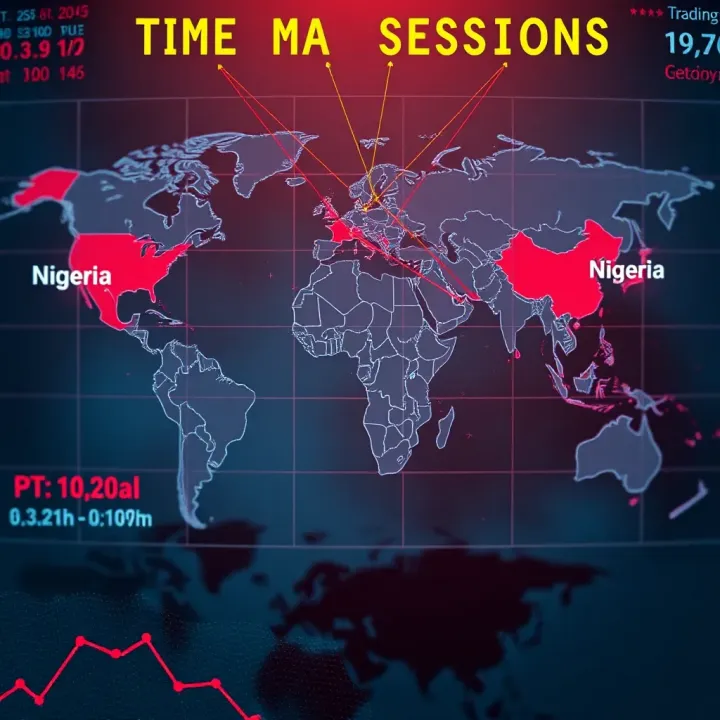
Forex Trading Hours and Nigeria's Time Zone
🌍 Understand forex trading hours and time zone impacts in Nigeria 🇳🇬. Learn how to align market sessions with West Africa Time (WAT) to trade smarter and profit more.
Edited By
Michael Turner
Trading forex in Nigeria can be quite different from other places due to unique local challenges and the global nature of the forex market. While the forex market operates 24 hours on weekdays, not all hours offer the same opportunities for Nigerian traders. Understanding when forex liquidity peaks and aligning these times with local conditions like power supply and internet stability can make a big difference in trading results.
Unlike stock markets, forex is decentralised and follows the major financial centres worldwide. The three key sessions you should know are the Asian (Tokyo), European (London), and American (New York) sessions. Each has distinct characteristics and times when trading volumes increase.
For Nigerians trading on platforms like MT4, MT5, or local brokers such as GTBank FX or Access Bank Forex, the overlap between the London and New York sessions is especially important. This overlap, usually between 2 pm and 6 pm WAT (West Africa Time), is when the market experiences the highest volatility and liquidity. It presents the best chances for price movements, ideal for day traders and scalpers.
That said, local challenges can't be ignored. Regular power outages, especially in rural areas, can disrupt trading. Many traders invest in inverter systems or generators to maintain a stable power supply during key sessions. Internet quality also matters a lot; poor connectivity can delay order execution, leading to losses. Choosing reliable internet service providers, or trading using data plans with strong LTE coverage, helps maintain better connection during volatile times.
Remember: Successful forex trading in Nigeria is not only about knowing global market open hours but also managing local realities effectively.
For swing traders or those with less time during the day, trading during the Asian session between 3 am and 11 am WAT can be profitable, though it tends to be less volatile. This session suits traders aiming for more steady price movements rather than quick scalps.
In summary, the best time to trade forex in Nigeria balances the global forex market's busiest hours with your personal trading style and local infrastructure reliability. Planning trades around high liquidity periods like the London-New York overlap and preparing for local power and internet challenges can improve your consistency and profitability over time.
Knowing the ins and outs of forex market hours and sessions is essential if you want to trade smart. The forex market operates 24 hours a day, but not all hours are equal in terms of activity and opportunity. Understanding when the market is busiest or quietest helps you pick the best moments to enter or exit trades, especially given local conditions in Nigeria like power and internet stability.
The forex market breaks down into three main sessions: Asian, European, and American. Each session corresponds to the working hours of its dominant financial centre - Tokyo for Asia, London for Europe, and New York for America. For a trader in Nigeria, this matters because Nigerian local time (West Africa Time, WAT) lines up differently with these sessions.
The Asian session starts around 12 am WAT and runs until 9 am, European is from 8 am to 5 pm, while the American session covers 1 pm to 10 pm WAT. These timelines affect when currencies, especially the major pairs involving USD, EUR, GBP, and JPY, experience noticeable moves. Knowing this helps you avoid trading when the market is slow, like the middle of the night in WAT.
Each session carries distinct features. The Asian markets tend to be less volatile with narrower spreads since major market players there set prices cautiously. The European session, centred on London, sees the highest volume and volatility because it overlaps with both Asia’s closing hours and the American market’s opening.
Meanwhile, the American session often carries strong momentum due to the impact of economic data from the US. These characteristics can help you align your trading style – for instance, scalping works better during high volatility in the London or New York sessions while longer-term trades may thrive during quieter Asian hours.
The overlap between these sessions is key to jump-starting price action. The most notable overlap occurs between London and New York from about 1 pm to 5 pm WAT; during this time, liquidity surges because traders in both financial hubs are active. This creates ample trading opportunities but also shifts spreads and volatility noticeably.
Forex volatility often behaves like a tide, ebbing and flowing according to session timing. Price movements are generally slow during session transitions and pick up during overlaps. Traders wearing the Nigerian timezone must therefore time their activities to coincide with these bursts, else risk trading in low-volatility periods that offer narrow profits and higher risk of slippage.
Liquidity follows the same pattern. High liquidity means more buyers and sellers in the market, which helps tighten spreads—the difference between buy and sell prices. During the London–New York overlap, liquidity peaks, so trading costs are often lower and execution smoother.
On the other hand, trading during the late Asian or early American sessions when liquidity dips can increase spreads and trading costs. This means your strategy should accommodate broader spreads or avoid trading at those hours to reduce unnecessary costs.
Understanding when the market breathes best, in terms of liquidity and volatility, can save you money and improve your trading strategies, especially considering Nigeria's challenges with internet and power reliability.
By timing your trades around session hours, you increase your chance of success while minimising costs, making your forex trading in Nigeria truly practical and profitable.
Trading forex in Nigeria comes with unique challenges that directly impact when and how you should operate. Unlike markets in developed economies with stable infrastructure, Nigerian traders face realities like erratic power supply and inconsistent internet connectivity. These factors can cause delays in trade execution or missed opportunities during crucial market moves.
Internet stability is vital for timely entry and exit in forex trading. In Nigeria, frequent network interruptions can cause delays, ultimately affecting trade outcomes and exposing traders to higher risks. For instance, during peak trading hours in London or New York sessions, a sudden drop in internet speed might prevent you from responding quickly to market shifts, leading to losses.
Power outages also disrupt trading activities. Many traders rely on generators or alternative power sources, but fuel costs add to operating expenses. Besides losing power, some traders struggle with voltage fluctuations that can harm their devices, risking downtime just when precise timing matters most.
Investing in a reliable Uninterruptible Power Supply (UPS) to keep devices operational during short outages
Using mobile data networks as an alternative to fixed broadband, especially with providers like MTN or Airtel that have broader coverage in rural and urban areas
Scheduling crucial trades during known periods of better network reliability, usually mid-mornings or early afternoons when internet traffic is lighter
Keeping multiple data SIM cards from different network providers to switch quickly if one network fails
Nigeria operates on West Africa Time (WAT), which is one hour ahead of GMT. This positioning means the London session, which typically runs 8 am to 4 pm GMT, begins 9 am and ends 5 pm in Nigeria. For traders, this affects when market volatility peaks and liquidity is highest.
The New York session starting at 1 pm WAT overlaps with the London afternoon hours until about 5 pm WAT. This overlap period is often when currency pairs involving USD and EUR demonstrate increased volatility, offering better trading chances.
Plan to trade during these overlap hours to take advantage of higher liquidity and tighter spreads
For early risers, the London session start offers opportunities from 9 am, but avoid trading too early when the market is less active
Longer-term traders can align their analysis with the Nigerian business day but open or close positions near these active windows
Being mindful of local time relative to global forex sessions helps optimise your trading schedule, ensuring you don’t miss key market moves due to unplanned delays or mismatched hours.
Working with Nigeria's infrastructure realities and aligning trading activities with your time zone improves your chances of better execution and profit. A strategic approach to power, connectivity, and timing can make a marked difference in your forex journey.
Knowing the best hours to trade forex in Nigeria can drastically improve your chances of making profits and managing risks effectively. Unlike stocks that trade during fixed hours, forex operates 24 hours across different global centres. But not every hour offers the same opportunity. For Nigerian traders, aligning trading times with active market hours can help avoid times of low liquidity and wide spreads, which usually add unnecessary costs.
Understanding these hours is essential because Nigerian traders work with West Africa Time (WAT), which sits one hour ahead of GMT. Consequently, the timing of major forex sessions like London, New York, and Tokyo have a direct impact on when Nigerian traders should be active.
The London session kicks off at 8 am GMT, which translates to 9 am WAT. This means Nigerian traders starting their day between 9 am and noon tap into one of the most liquid and volatile forex markets. Currencies like the British pound (GBP), euro (EUR), and US dollar (USD) experience heightened activity, offering ample opportunity for price movements.
For example, a forex trader in Lagos monitoring GBP/USD during this window can catch trends triggered by economic data releases from the UK. This period also benefits those looking for clear price action without the erratic swings often seen during Asian hours.
The New York session runs from 1 pm to 10 pm WAT. Afternoon traders in Nigeria can focus on this session to trade major US pairs like USD/JPY, USD/CAD, and USD/MXN. This period frequently sees significant moves especially during US economic announcements such as CPI reports or Federal Reserve updates.
Trading during these hours can be ideal for Nigerians who prefer afternoon or evening trading, allowing them to respond to market-moving news timed around US business hours. The overlap with London session for part of this window adds to market liquidity.
The overlap between the London and New York sessions (1 pm to 5 pm WAT) is arguably the most active trading window globally. During this time, liquidity is at its peak because two major markets run simultaneously.
For Nigerian traders, capitalising on these overlap hours means access to tighter spreads and more significant price swings. These conditions suit traders looking to catch quick price moves or swing trades. However, volatility can also mean higher risks; so strategy and discipline become crucial.
Taking advantage of overlap periods offers the best mix of liquidity and opportunity but requires careful timing and risk management.
Day traders and scalpers thrive on volatility and quick price changes. For them, trading during active sessions like London and the London-New York overlap is best. These windows offer frequent trade setups with clearer trends and higher volume, making it easier to execute short-term strategies.
For example, a scalp trader in Abuja may start trading at 9 am WAT, focusing on fast moves in EUR/USD or GBP/USD as London wakes up. Consistent liquidity reduces risks of price gaps or slippage common in slower periods.
Long-term or position traders are less dependent on specific market hours because they hold trades for days, weeks, or months. However, it's still wise to enter or exit positions when the market is most liquid to avoid paying inflated spreads.
For instance, a Nigerian trader holding a USD/NGN position might choose to open or close trades during London or New York sessions to benefit from smoother price execution. By doing so, they reduce the likelihood of unexpected market gaps common outside active hours.
Understanding how your trading style aligns with market hours empowers you to plan your trades better, improving profitability while managing risks specific to the Nigerian trading environment.
Success in forex trading isn't just about knowing when to buy or sell. Practical tips that reflect Nigeria's unique trading environment can save you from costly errors and improve your chances of making steady profits. Understanding the impact of local challenges like power outages and network issues ensures you stay ahead despite these hurdles.
In Nigeria, inconsistent power supply can be a major obstacle. Many traders face sudden blackout periods, especially during the ember months when electricity demand peaks. This can disrupt your trading activity or even cause losses if positions aren't monitored properly. To mitigate this, it's sensible to schedule trades during periods when power supply is relatively stable, usually early mornings or late evenings in some regions. Having a good power backup system, such as an inverter or generator, is essential if you trade frequently.
Likewise, internet reliability varies noticeably across states and service providers. A stable connection is critical for real-time price updates and quick execution. Traders should consider using high-quality mobile data services from providers like MTN or Airtel that tend to offer better coverage and speed in urban areas. Offline backup plans, like monitoring trades through SMS alerts or USSD codes where supported, can also help when internet drops unexpectedly.
Relying solely on home broadband may not be practical in many Nigerian settings, especially with frequent disruptions. Mobile data networks offer portability and faster reconnection times. Experiment with different data plans and SIM cards to identify the most reliable option in your trading location. For example, OPay and GLO often have strong signals in Lagos, while MTN prioritises coverage in Abuja and northern states.
Additionally, many fintech companies in Nigeria offer forex trading apps optimised for low data consumption and quick load times. Platforms like Bamboo or Trove, alongside traditional brokers' apps, allow you to trade seamlessly even on average connections. Using these mobile-friendly apps means you can continue trading while on the move, say during a danfo ride or at your usual buka.
Stop-loss orders are vital safeguards against unexpected market swings. By predefining a maximum loss threshold, you prevent emotional decisions that often lead to bigger losses. Suppose you buy euros expecting them to rise against the dollar but the price suddenly drops due to unforeseen news—your stop-loss order will automatically sell your position at the set limit, preserving the remainder of your capital.
In the Nigerian context, where network lags may delay manual exits, relying on automated stop-losses is even more crucial. It protects you from losses when you cannot make immediate moves, particularly during high volatility periods.
Forex markets can be slow and unpredictable during off-peak hours, causing wider spreads and choppier price action. Trading during these low liquidity times, for example in the middle of the night Nigerian time when neither London nor New York sessions are open, can increase risks unnecessarily.
It's wiser to avoid placing trades during such quiet periods, as slippage and failed executions are more common. Focus instead on the London or New York session overlaps, when volumes and market activities peak, offering tighter spreads and better execution.
Economic announcements significantly influence forex prices. For Nigerian traders, keeping an eye on key calendars—like interest rate decisions from the Federal Reserve or Bank of England, crude oil inventory reports, or Nigeria's own economic data releases—provides an edge.
Missing such events can cause you to hold positions during volatile spikes, resulting in unpredictable losses. Use reliable economic calendars and news sources to plan your trades around these events, entering or exiting positions ahead of expected turbulence.
A disciplined approach that accounts for Nigeria’s infrastructural realities, combined with smart risk management and awareness of global economic events, will greatly improve your forex trading outcomes.
By integrating these practical tips into your daily routine, you become better equipped to navigate Nigeria’s forex market challenges and enhance your trading success.
🌍 Understand forex trading hours and time zone impacts in Nigeria 🇳🇬. Learn how to align market sessions with West Africa Time (WAT) to trade smarter and profit more.
Discover how to pick the best forex broker in Nigeria 🇳🇬 with tips on regulation, platforms, fees, support, and avoiding common mistakes 📈💡
📈 Understand trade charts and master key indicators for stocks, forex & commodities. Practical tips tailored for Nigerian traders navigating the ₦-based market.
Discover top Nigerian forex traders! Learn how to spot trusted brokers, check experience, reputation & stay safe in forex trading. 📈💰🇳🇬
Based on 11 reviews