

Understanding Binary Brokers for Nigerian Traders
Explore how binary brokers operate in Nigeria 🇳🇬, learn to pick trusted brokers, understand risks & regulations, and get tips for safe trading success 📈.
Edited By
Charlotte Hughes
Trade charts are more than just lines and colours on a screen; they are essential tools for traders who want to make smart decisions in the Nigerian market. Whether you're dealing with stocks listed on the Nigerian Exchange (NGX), foreign exchange (forex), or commodities like crude oil and cocoa, understanding charts helps you see trends, spot opportunities, and manage risks.
At its core, a trade chart visualises price movements over time. Instead of guessing how prices move, charts give you actual data laid out clearly, often showing opening price, closing price, highs, and lows within a specific period. For Nigerian traders, this clarity is key because market conditions can shift quickly due to economic news, Central Bank of Nigeria (CBN) policy changes, or global commodities price swings.
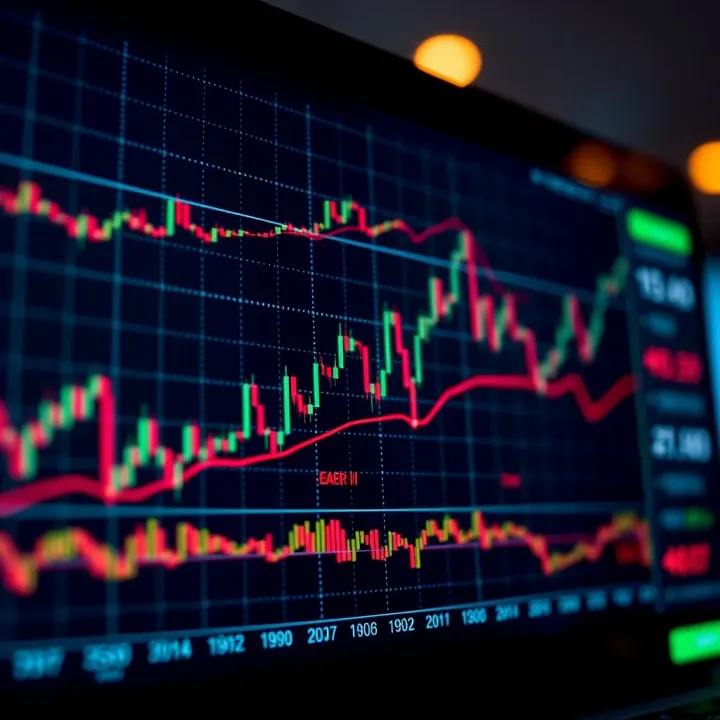
There are several common types of charts Nigerian traders should know:
Line charts: Simple and clean, connecting closing prices with a line. Good for quick snapshots.
Bar charts: Show detailed price info including open, high, low, and close within each time frame.
Candlestick charts: Popular among Nigerians trading forex and stocks. They display price movements as 'candles' with bodies and wicks, making it easier to spot market sentiment.
Knowing how to read these charts is foundational, but recognising chart patterns and indicators can sharpen your trading edge.
Chart patterns like "head and shoulders" or "double top" reveal potential trend reversals or continuations. Indicators such as the Moving Average Convergence Divergence (MACD), Relative Strength Index (RSI), or Bollinger Bands help measure momentum and volatility.
For instance, if you spot a bullish engulfing pattern on a candlestick chart of Montague Holdings shares, it could hint at an upcoming price rise. Meanwhile, RSI above 70 might signal that an asset is overbought and due for a correction.
Understanding these concepts empowers you to enter or exit trades at better times, increasing the chance to protect your capital and grow your portfolio despite the naira’s fluctuations and market uncertainties.
Traders in Nigeria should combine chart reading with awareness of local market events—like CBN policy shifts, fuel subsidy talks, or election seasons—because such factors influence trader behaviour and price trends significantly.
In the sections that follow, we will break down each chart type, explain key indicators, and offer actionable tips tailored for Nigerians navigating the ₦-based financial environment. This practical knowledge is your first step towards more confident and informed trading decisions.
Trade charts are visual tools that show the movement of asset prices over time. For Nigerian traders, whether you are dealing with stocks on the Nigerian Exchange (NGX), forex pairs like USD/NGN, or commodities such as crude oil, understanding these charts helps you track price trends, spot patterns, and make more confident trading decisions.
At their core, trade charts display historical price information graphically. Time is usually shown on the horizontal axis, while prices are plotted on the vertical axis. This visualisation makes it easier to identify how prices have moved—whether they’re rising, falling, or holding steady. For example, a line chart tracing the recent performance of MTN Nigeria shares can quickly show if the stock has been consistently gaining or facing downward pressure.
Trade charts serve several purposes:
Monitor Market Trends: Traders can spot bullish or bearish trends early.
Identify Entry and Exit Points: Charts help decide when to buy or sell.
Understand Market Volatility: Larger swings in price become evident.
This tool replaces tedious number crunching with clear, at-a-glance insights.
Trade charts act like a trader’s compass. For instance, if you notice a repeated pattern where the price of a Nigerian government bond dips to a certain level before gaining, you might use that support level to decide when to purchase. Similarly, seeing a resistance level—where price struggles to move higher—helps determine when to sell or take profits.
Indicators displayed on charts, such as moving averages or volume, add more layers to your analysis. A sudden spike in trading volume on a stock like Access Bank might signal a big move coming, urging you to act quickly.
Using charts also helps traders avoid emotional decisions. Instead of guessing which way the market will move, the charts provide evidence-based signals that have served many Nigerian traders well across equities, forex, and commodity markets.
For Nigerian traders, mastering trade charts is not just about reading graphs; it’s about making data-driven moves in markets that can be volatile and sometimes unpredictable.
Understanding the basics of trade charts lays the foundation for more advanced techniques covered in this guide. It’s the first step toward turning market information into trading success.
Trade charts are the foundation for many decisions made by traders and investors in Nigeria. Understanding the types of charts commonly used is essential because each presents market data differently, providing unique insights depending on the trader’s style and goals. Nigerian traders often rely on line, bar, and candlestick charts when analysing the Lagos Stock Exchange (LSE), forex pairs like USD/NGN, or commodities such as crude oil.
Line charts display a simple connection of closing prices over a selected period. They offer a clean visual showing the general direction or trend of an asset’s price movement. For example, if you're tracking Zenith Bank shares over a month, a line chart helps spot if the price is steadily climbing or falling without distractions from intraday fluctuations.
This simplicity is why beginners often prefer line charts—they strip away noise and focus on the big picture. However, line charts do not show the range of price movements during the day; hence, they may miss important volatility signals. Nigerian traders might use line charts for checking overall trends before drilling down to more detailed chart types.
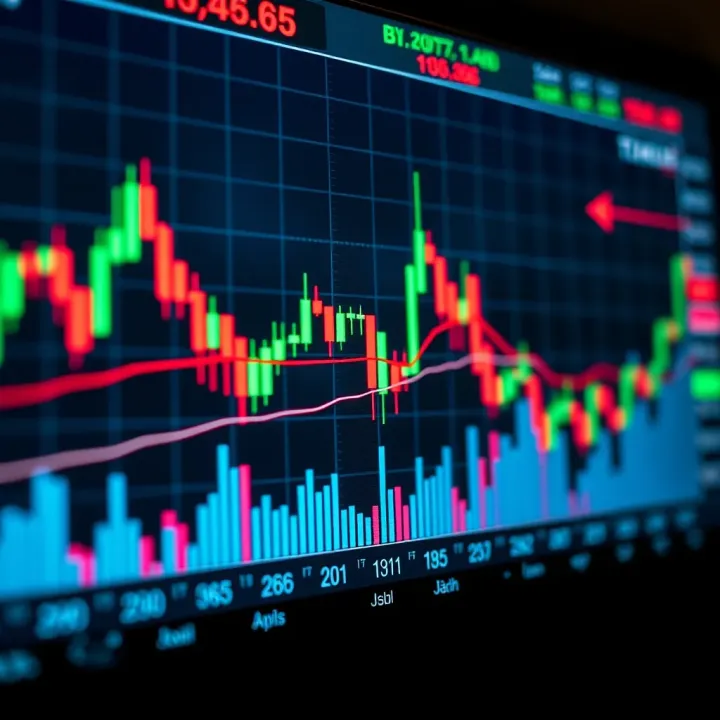
Bar charts bring more depth by illustrating open, high, low, and close (OHLC) prices for each trading period. This means you get a richer picture of how prices fluctuate within a day or week. For someone trading Nigerian forex markets or agricultural commodities, bar charts reveal volatility and market sentiment shifts.
Imagine tracking the price of oil palm seeds over a week: the bar chart will show days when price swings were sharp, signalling higher risk or opportunity. Bar charts help traders identify patterns like gaps and swings, making them useful for those aiming to time entries and exits more precisely than with line charts.
Candlestick charts combine the OHLC data with intuitive visual cues. Each candlestick’s body colour and length shows whether buyers or sellers dominated the session. For Nigerian traders active in stocks like Dangote Cement or forex trading on platforms like MTN Money, candlesticks quickly highlight sentiment shifts.
A green (or white) candlestick means the price closed higher than it opened, signalling bullish sentiment. A red (or black) one means sellers had the upper hand. Candlestick patterns such as hammers, dojis, and engulfing candles can hint at reversals or continuations in price trends.
Candlestick charts are popular because they marry data richness with visual clarity, helping traders spot market emotions at a glance.
Many Nigerian traders combine candlestick charts with indicators for better timing. Platforms like ProShare or Investing.com Nigeria support detailed candlestick views with volume and moving averages, aiding smarter trade decisions.
Understanding these three chart types lets you pick the right tool depending on your trading style—whether you prefer straightforward trend analysis or detailed day-to-day price action. Mastery of line, bar, and candlestick charts forms the bedrock of successful trading in Nigeria’s dynamic markets.
Grasping key elements on trade charts is vital for Nigerian traders looking to make solid investment choices. Trade charts are not just lines and colours on the screen; they tell the story of price movement and market behaviour over time. Understanding these elements helps spot trends, anticipate reversals, and manage risk effectively.
Every chart has two main axes: price on the vertical (y-axis) and time on the horizontal (x-axis). Reading them properly is foundational. The price axis displays the range within which the asset has traded — for example, a stock on the Nigerian Exchange Group (NGX) might fluctuate from ₦50 to ₦200 over a month. The time axis shows how those prices changed across days, weeks, or even minutes, depending on your chart’s timeframe. Knowing which timeframe suits your trading style ensures you aren’t misreading short-term jitters as long-term trends or vice versa. For instance, a forex trader dealing in NGN/USD might focus on 15-minute candles, while a stock investor could look at daily closing prices.
Support and resistance levels serve as key psychological price barriers. Support is where buyers typically step in, pushing prices up, while resistance is where sellers tend to offload, slowing price rises. Nigerian traders should pay attention to these, especially when trading equities like Guaranty Trust Bank or Dangote Cement shares. If a stock repeatedly bounces off ₦30 (support), it might signal a good entry point. Conversely, if it struggles around ₦45 (resistance), caution is advised before expecting more gains. These levels also guide stop-loss placement to protect against sudden price drops.
Identifying these zones isn’t guesswork; it requires watching price histories and volume activity closely to mark areas of frequent reversals or pauses.
Volume shows the number of shares or contracts traded within a period and is crucial for confirming price moves. For example, a rise in stock price accompanied by rising volume on the NGX indicates strong buying interest, reinforcing the uptrend’s validity. On the other hand, a price rise with declining volume might suggest the move is weak and prone to reversal. Nigerian traders often overlook volume but considering Nigeria's market peculiarities like low liquidity in some stocks, volume indicators help avoid traps. Tools like the On-Balance Volume (OBV) or simple volume bars can reveal whether buyers or sellers dominate, helping traders decide when to enter or exit.
Mastering these chart elements equips Nigerian traders with clearer market insight, sharper timing, and better risk management suited to local market conditions.
Chart patterns are fundamental to making sense of market behaviour, especially in volatile environments like the Nigerian stock and forex markets. These patterns help traders anticipate future price moves by recognising formations that the market frequently creates. Knowing what these shapes imply can sharpen your entry and exit strategies, reducing guesswork.
Reversal patterns indicate a change in the current price trend. The head and shoulders pattern is a classic example signalling a possible shift from an uptrend to a downtrend. It looks like a peak (shoulder), then a higher peak (head), followed by another lower peak (shoulder). For instance, if a Nigerian trader spots this on the NGX All-Share Index chart after a long rally, it could be a cue to sell or take profits.
Double tops and bottoms signal a similar idea but in simpler terms. A double top looks like the price tries twice to break a resistance level but fails, hinting at a potential fall. Conversely, a double bottom suggests possible upward movement after support holds twice. For example, if a popular forex pair like USD/NGN forms a double bottom on the chart, traders might expect a rise in naira value or stability.
Unlike reversal patterns, continuation patterns suggest the current trend will likely persist after a brief pause. Flags appear as small rectangles slanting against the prevailing trend, often after a sharp price move. Pennants resemble small symmetrical triangles following a spike. Nigerian traders watching oil futures or agricultural commodity prices on charts can spot these patterns to confirm ongoing momentum.
For example, a sudden surge in the price of cocoa followed by a flag formation might indicate the uptrend will continue once the flag resolves. These patterns help traders stay with the trend, avoiding premature exits especially in fast-moving markets.
Chart patterns offer practical signals, but they’re not foolproof. Combining them with volume analysis and technical indicators strengthens their reliability. If a reversal pattern forms with rising volume on breakout, it’s a stronger signal. Meanwhile, continuation patterns backed by steady volume confirm momentum.
In Nigeria's context, where market liquidity and news flow can cause sudden shocks, blending chart pattern recognition with local market awareness is critical. Remember, patterns like head and shoulders or pennants provide a map, but you must consider macroeconomic events, CBN policies, or political developments affecting the asset.
Understanding popular chart patterns equips Nigerian traders with visual cues that simplify complex market moves. Recognising these shapes boosts confidence in decision-making, ensuring you react to real shifts rather than noise.
Always validate patterns with additional indicators or market news to avoid pitfalls and to make quality trading decisions in the Nigerian markets.
When analysing trade charts, indicators and other tools add depth to the raw price and volume data. They help traders spot trends, gauge momentum, and make better-informed decisions. For Nigerian traders navigating volatile markets like the Nigerian Stock Exchange (NGX) or foreign exchange (forex) platforms, these tools are invaluable.
Moving averages smooth out price fluctuations to reveal underlying trends. For example, a 50-day moving average calculates the average price over the last 50 days, cutting through short-term noise. Traders often look at how the current price relates to moving averages to decide whether an asset is trending upwards or downwards.
Trend lines, on the other hand, are straightforward tools to identify support and resistance levels visually. Drawing a line that connects consecutive highs or lows helps reveal price patterns. A rising trend line suggests bullish sentiment, while a falling one indicates selling pressure. Nigerian traders frequently use these to time entry or exit points especially when dealing with shares like Dangote Cement or Shoprite Nigeria.
The RSI measures how quickly and extensively prices have changed, indicating overbought or oversold conditions. An RSI above 70 often signals that a stock might be overbought, suggesting a potential pullback. Conversely, below 30 can denote oversold levels, hinting at a possible bounce.
Momentum indicators help traders understand the speed of price changes. Combined with RSI, they give a more complete picture of when price shifts are likely to continue or reverse. For instance, a forex trader watching the USD/NGN pair may notice RSI readings to adjust strategies based on naira's volatility.
Many Nigerian traders combine several indicators rather than relying on just one. For example, integrating moving averages with RSI clarifies signals, reducing the risk of false alarms in markets often influenced by macro events like CBN policy changes or foreign portfolio flows.
Especially in the Nigerian context, where market liquidity can be inconsistent, using indicators alongside news and fundamental data improves accuracy. Some traders also set stop-loss orders based on indicator thresholds to protect capital during ember months when market swings tend to be sharper.
Practical experience with these tools, coupled with local market knowledge, often sets apart successful Nigerian traders from novices. The key is to tailor indicator use to one's trading style while staying adaptable to market shifts.
By mastering these indicators and tools, traders can improve timing, manage risks, and better navigate the fluctuating Nigerian markets.
Trade charts offer Nigerian traders a crucial window into market behaviour, helping them make informed choices amid the unique complexities of local markets. Using trade charts isn’t just about spotting patterns or technical setups; it’s about understanding how economic factors, regulatory shifts, and market dynamics in Nigeria influence price movements. For example, when the Central Bank of Nigeria (CBN) adjusts monetary policy, it often causes volatility in forex and stock markets, which becomes visible on trade charts and guides timely decisions.
The Nigerian market presents distinctive challenges that traders must consider when using trade charts. First, liquidity can be inconsistent, especially on the Lagos Stock Exchange, where some shares have low daily volumes. This thin liquidity often leads to erratic price swings that complicate technical analysis. Also, regulatory announcements or political events can generate unexpected spikes or drops unrelated to technical signals, requiring traders to combine chart reading with news awareness.
Moreover, the naira's volatility and occasional forex restrictions complicate forex chart interpretation. Currency controls and parallel market rates affect price clarity on charts, making it essential for traders to cross-check data from reliable sources. Finally, network interruptions and access to real-time market data can be a hurdle for traders relying on online charting platforms, especially outside major cities.
Start by choosing charts with timeframes that suit your trading style: day traders should use 5-minute or 15-minute charts, while long-term investors might focus on daily or weekly charts for clearer trends. Always watch out for key support and resistance levels established during Nigerian trading hours, as market behaviour can differ before and after local business hours.
Integrate fundamental news into your technical analysis. For instance, if the Federal Government announces subsidy changes or inflation data that impacts the NGX, chart movements often follow. Combining volume indicators with price patterns during such events provides a more robust trading edge.
Risk management is vital. Use stop-loss orders guided by chart support points to limit losses, especially given the occasional sharp price gaps seen in Nigerian stocks. Also, beware false breakouts common in low liquidity situations.
Several platforms are reliable and widely accessible for Nigerian traders. Investing.com and TradingView offer free, interactive, and detailed charting tools with access to NGX and forex markets. Their mobile apps are popular among Lagos traders who need on-the-go updates.
For localised features, MTN Alpha provides charts with integrated news and market data reflecting Nigerian peculiarities. GTBank and Access Bank also offer digital platforms with embedded market information helpful for customers trading equities.
Lastly, fintech platforms like OPay and PalmPay are increasingly incorporating basic charting for their investment services, catering to retail traders transitioning from traditional methods.
Leveraging trade charts effectively in Nigeria requires blending technical tools with a sharp eye on local market events, liquidity challenges, and currency fluctuations. Practical preparation is key to turning charts into actionable insights.
Explore how binary brokers operate in Nigeria 🇳🇬, learn to pick trusted brokers, understand risks & regulations, and get tips for safe trading success 📈.
Explore the ins and outs of binary accounts 📊 Understand their role in finance and trading in Nigeria 🇳🇬, with tips on managing risks and benefits.
Explore market structures like perfect competition, monopoly, monopolistic competition & oligopoly in Nigeria 🇳🇬. Understand their impact on businesses and consumers 📊.

🔍 Discover copy trading basics, platforms, pros & risks, plus tips tailored for Nigerian investors. Make smart, informed investment choices today! 📈🇳🇬
Based on 5 reviews