
Understanding Binary.com for Nigerian Traders
Explore Binary.com trading in Nigeria 🇳🇬: setup, security tips, and trading types. Get ready to trade smarter with practical advice and insights! 💼📊
Edited By
Daniel Foster
The EUR/USD currency pair remains one of the most actively traded pairs in the global forex market, directly influencing how traders and investors approach the financial landscape. For Nigerian traders, understanding the EUR/USD movements is especially vital due to the naira's sensitivity to external shocks and international trade flows.
The pair reflects the relative strength between the Eurozone economy and the US economy. Factors such as interest rates set by the European Central Bank (ECB) and the US Federal Reserve (Fed), geopolitical tensions, commodity prices, and global risk appetite all weigh heavily on its direction. For example, a hawkish Fed signalling higher interest rates typically strengthens the US dollar against the euro, reducing EUR/USD prices.
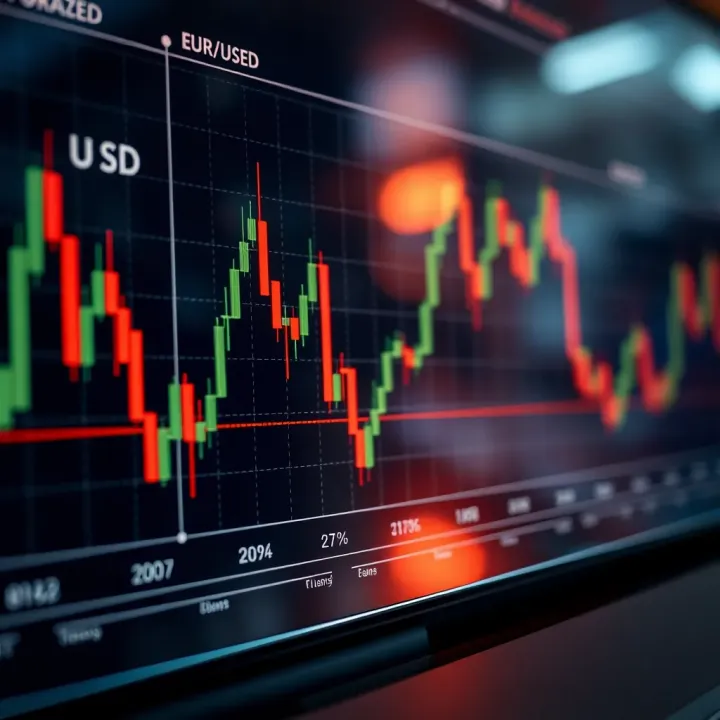
In Nigeria, forex traders often encounter unique challenges like currency restrictions and fluctuating naira exchange rates at official and parallel markets. Accessing accurate EUR/USD forecasts helps anticipate market moves and manage risks effectively.
Key drivers impacting EUR/USD include:
Monetary policies: Divergent central bank actions, such as rate hikes or quantitative easing, create volatility.
Economic data releases: German industrial output or US non-farm payroll numbers provide clues to the pair’s trajectory.
Geopolitical events: Brexit aftermath, US-China trade talks, or European political elections can unsettle markets.
By monitoring these elements, Nigerian traders can craft strategies that suit their risk appetite and trading style, whether short-term scalping or longer-term positioning.
Accurate and timely EUR/USD analysis is key for Nigerian traders aiming to safeguard profits and navigate local market peculiarities like naira volatility and restricted forex access.
This article will break down relevant technical indicators, fundamental factors, and practical tips tailored for the Nigerian landscape. Through informed decisions, traders can better capitalise on EUR/USD movements and mitigate adverse impacts on their portfolios.
Understanding the EUR/USD pair is foundational for any trader dealing in forex, especially for Nigerian investors looking to navigate global markets profitably. This pair represents the exchange rate between the euro, used by the Eurozone countries, and the US dollar, the world's primary reserve currency. Its significance lies not only in its liquidity but also in the economic interplay it reflects between two of the largest economies.
The EUR/USD pair tells you how many US dollars are needed to buy one euro. It’s the most traded currency pair worldwide, averaging daily volumes that dwarf many other pairs combined. For Nigerian traders, the EUR/USD offers access to a stable and highly liquid market, often providing tighter spreads and better price discovery compared to local currencies or less traded pairs.
Consider a Nigerian forex trader using platforms like FXTM or InstaForex linking their trading to the EUR/USD. Movements in this pair can signal shifts in global economic moods, affecting everything from import costs to remittance flows back home. For example, when the US dollar strengthens sharply against the euro, it usually means imported goods priced in dollars become more expensive for Nigerians who earn or spend in euros or naira pegged loosely to these currencies.
EUR/USD serves as a benchmark for the forex market’s health. Central banks worldwide keep a close eye on its movement when deciding monetary policy or intervening in FX markets. Because of its volume and sensitivity to economic indicators — like US Nonfarm Payrolls or Eurozone inflation data — it acts as a leading indicator to other currency pairs.
For Nigerian traders, monitoring this pair can help anticipate wider trends affecting other forex transactions. It’s also crucial for hedging activities, especially for businesses importing goods from Europe or the US, who need to manage currency risk effectively. In practical terms, say a Nigerian exporter has earnings in euros; a sudden dip in EUR/USD means fewer naira when converted, impacting profit margins.
The EUR/USD is more than a forex rate; it’s the pulse of global trade relations and economic policy shifts. Tracking it sharpens trading strategies and informs decision-making for Nigerian forex participants.
By grasping the basics and the global importance of this pair, Nigerian traders can better position themselves to understand broader market movements, manage risks, and seize opportunities.
Understanding the key factors influencing the EUR/USD exchange rate is essential for traders focused on this pair. The value of the euro against the US dollar does not move on whims; rather, it reflects underlying economic realities and policy decisions from both sides of the Atlantic. For Nigerian traders, recognising these elements helps in anticipating market swings and making informed trading decisions.

Monetary policies from the European Central Bank (ECB) and the US Federal Reserve (Fed) drive significant changes in EUR/USD dynamics. When the Fed raises interest rates, for instance, it often boosts the dollar because higher rates attract investment seeking better returns. Conversely, if the ECB adopts a loosening policy by cutting rates or expanding quantitative easing, it can weaken the euro. A practical example was in late 2023 when the Fed continued hiking rates while the ECB kept easing, causing EUR/USD to slide below 1.05. Nigerian traders should watch statements and policy moves closely since central banks' actions tend to move markets sharply and quickly.
Key economic reports also steer EUR/USD trends. In the Eurozone, figures such as GDP growth, inflation rates, unemployment levels, and industrial production matter a lot. Similarly, US economic data like non-farm payrolls, consumer price index (CPI), and retail sales influence dollar strength. For example, stronger US job numbers often lead to dollar appreciation as they suggest a robust economy and possible interest rate hikes. Traders in Nigeria frequently monitor these releases via economic calendars to time their trades effectively, especially given the time difference and the need to act swiftly.
Geopolitical events—ranging from trade tensions to political instability—affect the EUR/USD exchange rate by creating uncertainty or confidence in either currency. For instance, Brexit negotiations in the past created volatility impacting the euro’s performance. Likewise, global market shocks like oil price crashes or major conflicts can push investors towards safe-haven currencies such as the US dollar. For Nigerian traders, who often deal with naira volatility themselves, understanding these external shocks can be the difference between profit and loss, especially when global risk appetite shifts.
Monitoring these three areas—central bank policies, economic data, and geopolitical developments—gives Nigerian traders practical edge in forecasting EUR/USD movements and managing exposure wisely.
In summary, the EUR/USD rate is shaped by numerous, often interconnected factors. Staying alert to these can help Nigerian investors trade with insight rather than guesswork.
Technical analysis offers Nigerian traders a practical way to predict the EUR/USD currency pair's price movements by examining past market data, primarily price and volume. Instead of focusing on economic fundamentals alone, technical analysis helps traders spot patterns and trends that often repeat due to market psychology. This insight can guide timing and strategy in forex trading.
Recognising trends is a cornerstone of technical analysis. An uptrend means the EUR/USD price generally rises over a period, while a downtrend shows a consistent fall. For example, from the beginning of 2023, EUR/USD exhibited a clear downtrend triggered by rising US interest rates. Spotting such trends early helps traders decide when to enter or exit the market.
Support and resistance levels are key price points where the trend tends to pause or reverse. For instance, if EUR/USD repeatedly falls to 1.0500 without going lower, that level acts as support. Conversely, if it struggles to break above 1.1000, that is resistance. These levels highlight areas where selling or buying pressure changes, enabling traders to place stop-loss or take-profit orders strategically.
Indicators like Moving Averages (MA), Relative Strength Index (RSI), and Moving Average Convergence Divergence (MACD) help simplify complex price data. For example, a trader might watch a 50-day MA crossing below a 200-day MA (a "death cross") as a signal to sell EUR/USD. Similarly, RSI readings above 70 may indicate overbought conditions, signalling a potential reversal.
Chart patterns such as Head and Shoulders, Double Tops/Bottoms, and Triangles reveal potential trend reversals or continuations. Taking the Head and Shoulders pattern, which often predicts a bearish reversal, a trader could sell the EUR/USD pair if the pattern completes near a resistance level.
By combining trend analysis, support/resistance identification, and indicators, Nigerian traders can make more informed decisions, reducing guesswork in a forex market often influenced by global events beyond local control.
To apply these techniques effectively, traders should use reliable charting tools offered by platforms like MT4, MT5, or local brokers like FXTM and HotForex. Practising with demo accounts before risking real naira can sharply improve trading success.
Fundamental analysis plays a critical role in forecasting the EUR/USD currency pair by examining economic, financial, and political factors that affect the exchange rate. For Nigerian traders, understanding these fundamentals provides a strong basis for making informed decisions beyond mere chart patterns. It digs into real-world events, such as policy changes or economic data releases, that directly impact currency flows between the Eurozone and the United States.
Macroeconomic data are among the keystones of fundamental analysis. Reports on GDP growth, employment figures, inflation rates, and trade balances from both the Eurozone and US influence the strength of the respective currencies. For example, if the US releases a strong non-farm payroll report accompanied by rising wage growth, the US dollar tends to gain against the euro due to expectations of tighter monetary policy.
Nigerian traders should closely watch monthly and quarterly releases from institutions like the US Bureau of Labour Statistics and Eurostat, as these reports often lead to short-term volatility in the EUR/USD pair. Besides, measures such as the Purchasing Managers' Index (PMI) signal economic health; a rising PMI in the Eurozone could support the euro, while a decline might push it down against the dollar.
Central banks, specifically the European Central Bank (ECB) and the Federal Reserve (Fed), are the main drivers behind the EUR/USD movements. Their monetary policies influence interest rates and liquidity, affecting demand for both currencies.
Public announcements, minutes of meetings, and speeches by key figures in the ECB or Fed signal potential shifts in policy stance. For instance, a hawkish tone—suggesting higher interest rates to control inflation—usually strengthens the respective currency. Conversely, dovish communication hints at looser policy and tends to weaken the currency.
Traders in Nigeria must monitor these communications closely. Consider the Fed’s Federal Open Market Committee (FOMC) statements or the ECB’s Governing Council releases, which often trigger significant market moves. Since Nigeria’s economy is sensitive to foreign exchange fluctuations, grasping these signals can help manage risks better and time entries or exits around major central bank events.
Successful EUR/USD forecasting relies heavily on a clear understanding of economic data and central bank intentions. Nigerian traders who integrate both can achieve more precise market timing and manage risks effectively.
Overall, fundamental analysis provides Nigerian traders with a grounded approach to EUR/USD trading by exposing the market forces beneath price changes. The combination of macroeconomic insights and central bank policy awareness equips traders to navigate periods of volatility with greater confidence and accuracy.
Navigating the EUR/USD currency pair requires more than just understanding the numbers; Nigerian traders must apply practical strategies to turn forecasts into profit. This section offers concrete tips to manage risks, take advantage of local financial infrastructures, and time trades for maximum impact.
Volatility in forex markets can hit hard, especially the EUR/USD pair influenced by global events and central bank moves. Nigerian traders should diversify their trades—do not put all savings into one position. Use stop-loss orders to prevent large losses when the market swings unexpectedly. For example, if you enter a trade at 1.0800, set your stop-loss at 1.0750 to cap potential losses. Avoid trading during major political unrest or sudden market shocks, common during global ember months, since unpredictability spikes.
Successful risk management is less about predicting market highs and lows, and more about protecting your capital from unforeseen moves.
Employing leverage should be done with caution. While brokers may offer high leverage, it magnifies both gains and losses. Start small with reasonable leverage like 1:10 and increase only when you’ve thoroughly tested your strategy.
Using local payment systems like OPay, PalmPay, or Paystack for deposits and withdrawals can save Nigerian traders time and money. These platforms ensure swift, low-cost transactions compared to international banks, which often charge hefty fees and take longer. Besides, local brokers registered with regulatory bodies like the Securities and Exchange Commission (SEC) Nigeria offer better customer protection and quicker dispute resolution.
Choose brokers who provide accounts in Naira to avoid exchange rate losses, and those with transparent fee structures. For instance, some brokers charge commission on every trade, while others have spreads built-in. Nigerian traders should read the fine print to avoid hidden costs.
Economic indicators such as US non-farm payrolls, Eurozone GDP figures, and Central Bank of Nigeria’s (CBN) policy announcements significantly sway the EUR/USD exchange rate. Nigerian traders should mark their calendars for releases like ECB rate decisions and US Federal Reserve statements, which usually trigger sharp price movements.
Trading immediately after these releases can offer profit opportunities but carries high risk. A practical strategy is to wait 15–30 minutes after the release to observe market reaction before entering a trade. Also, aligning trading hours with peak market activity—London and New York sessions—usually provides better liquidity and narrower spreads, improving trade execution.
Implementing these practical tips helps Nigerian traders to trade the EUR/USD pair informed, prepared, and efficiently, ultimately improving their chances of success in a market that can change in the blink of an eye.
Explore Binary.com trading in Nigeria 🇳🇬: setup, security tips, and trading types. Get ready to trade smarter with practical advice and insights! 💼📊

📈 Discover how TradingView empowers Nigerian traders with advanced charting, market analysis, and custom setups. Boost your trading skills today!

📊 Compare TradingView and Deriv.com to find the best trading platform for Nigerian traders. Discover tools, features, and support for smarter trading decisions!

Discover how traders trust shapes business in Nigeria 🛒. Learn key tips to build loyalty, keep your reputation strong, and survive market challenges with confidence 🔑.
Based on 12 reviews