

Understanding Binary.com for Nigerian Traders
Explore Binary.com trading in Nigeria 🇳🇬: setup, security tips, and trading types. Get ready to trade smarter with practical advice and insights! 💼📊
Edited By
Sophie Bennett
Access to funding remains a major challenge for many Nigerian traders. Whether you run a mama put on a busy Lagos street or manage a growing enterprise in Abuja, getting the right capital can make or break your business. Traders often face hurdles like high interest rates, unclear lending criteria, and a lack of formal credit history.
Understanding the available funding options helps you navigate this landscape better. Some sources might suit your business size and nature more than others. For instance, microfinance banks and cooperative societies often offer smaller, short-term loans, while commercial banks prefer established businesses with solid records.

Among traders, informal lending from friends, family, or rotating savings and credit associations (ROSCAs) still plays a significant role. These methods may lack formal paperwork but can provide quick access to cash without intimidating collateral demands. However, relying solely on informal funds restricts the ability to scale beyond day-to-day operations.
Before seeking funding, evaluate your business needs clearly. Define how much money you require, what it will cover, and how soon you expect returns. Lenders usually want to see a clear plan showing your ability to repay. A simple cash flow statement or basic business plan can strengthen your case.
Having a well-thought-out funding strategy not only improves your chances of approval but also safeguards your business from unnecessary risks like overborrowing or falling into debt traps.
In the sections ahead, we will explore common funding sources for Nigerian traders, criteria lenders use when assessing applications, and tips to manage funds effectively. This knowledge aims to equip you with practical tools to secure capital and grow your business sustainably.
Knowing your exact funding needs is the first step for any trader seeking financial support in Nigeria. This helps prevent borrowing too much or too little, both of which can create problems. For example, a small-scale trader in Balogun market doesn't need the same capital as a commodity exporter dealing with large consignments. Clarity about funding needs improves planning and strengthens your case when approaching lenders.
Small-scale market traders typically run stalls or small shops selling everyday items like foodstuff, clothes, or mobile accessories. Their capital needs revolve around procuring enough stock to meet daily demand and manage modest operating costs. For instance, a trader selling fabrics may need ₦100,000 to ₦300,000 to stock up and maintain supplies for a week or two, depending on sales volume.
Medium-sized retail businesses often operate with more elaborate setups, including warehousing and staffing expenses. They require higher capital outlay for inventory, rent, and staff salaries. A retail shop in Ikeja could need several million naira just to keep adequate stock levels for serving a broader customer base effectively. Their funding needs also cover marketing and occasional refurbishment to remain competitive.
Commodity and export traders engage with large volumes of goods like cocoa, palm oil, or minerals for both local and international markets. Their capital requirement runs into tens or hundreds of millions of naira. Besides inventory, they need funds for logistics, quality control, regulatory compliance, and sometimes upfront payments before shipments. For example, a cocoa exporter in Ondo might need ₦50 million or more just to cover a single purchase batch, including transportation to the port.
Working capital for daily operations ensures your business runs smoothly day-to-day, covering expenses like market fees, utility bills, and small-scale staff wages. Without this fund, even well-stocked traders can struggle to meet immediate operational demands. A food seller in a busy Lokoja market needs regular cash flow to buy fresh ingredients daily.
Inventory and stock procurement require specific funds to buy fresh or bulk products for sale. Timing is crucial here; buying enough inventory before peak seasons like the ember months or festive periods can attract better sales and profits. Traders in Lagos preparing for Christmas also allocate extra funds to stock fast-moving items like textiles and electronic gadgets.
Expansion and diversification involve broadening your product range or opening new branches. This funding purpose often calls for larger, longer-term finance. For example, a clothing retailer in Enugu may diversify into shoes and accessories, requiring detailed financial planning and adequate funding to avoid cash-flow problems during expansion.
Clear identification of funding needs is not just about accessing money; it’s about using that money wisely to grow and sustain your business under Nigerian market realities.
Understanding these nuances enables traders to approach funding strategically, making the best use of available resources to achieve their business goals.
Understanding where to get capital is a key step for Nigerian traders wanting to grow their businesses. This section explains various funding sources that traders can tap into, each with practical uses depending on business size and needs.
Bank loans and overdrafts remain the go-to funding methods for many traders who have established good banking relationships. Banks offer overdrafts as flexible, short-term credit useful for smoothing cash flow gaps, especially when stocking up for busy periods like the ember months. However, accessing bank loans often requires proper documentation and collateral, so not every trader can qualify easily. For example, a retailer in Lagos with steady sales might obtain a ₦2 million loan for inventory expansion but must also demonstrate repayment capacity to avoid rejection.
Microfinance institutions (MFIs) cater primarily to small traders who struggle to meet banks’ strict requirements. MFIs like LAPO, Accion, and others provide smaller loans more quickly, often with less paperwork. These institutions play a vital role for market traders or small kiosks needing ₦50,000 to ₦500,000 for daily stock replenishment or equipment purchases. Though interest rates are usually higher than banks, the accessibility makes MFIs a practical choice.
Cooperative societies and thrift groups serve as grassroots funding sources deeply rooted in Nigerian culture. Such groups pool resources from members who contribute regular savings, enabling traders to borrow from the collective fund. For instance, members of an Isale Eko cooperative might take turns receiving lump sums to fund business orders or pay rent. This peer support system also builds a safety net for traders facing cash shortages during lean seasons.
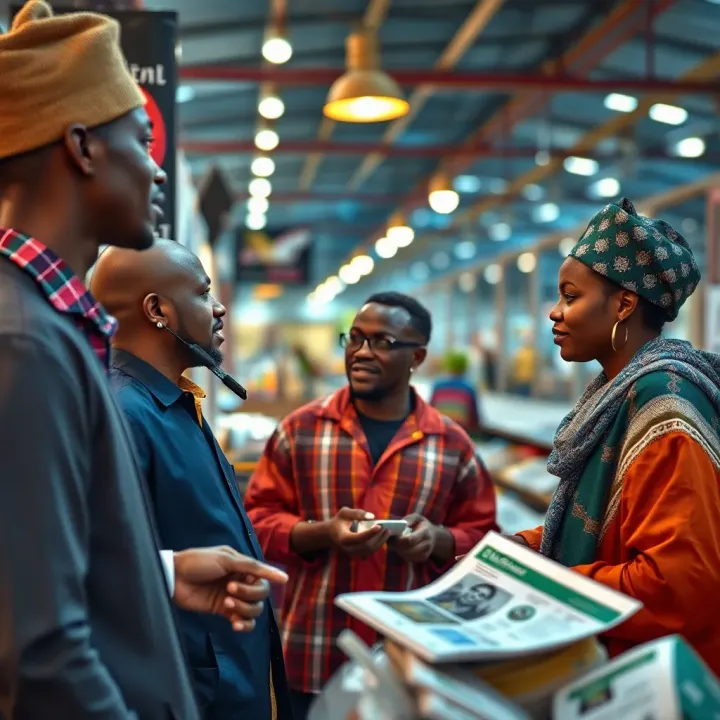
Fintech solutions like Paystack, Flutterwave, and OPay have transformed how Nigerian traders access funds and manage payments. Beyond processing sales, these platforms offer credit facilities based on transaction history, allowing traders to borrow without traditional collateral. A small suya seller using OPay’s wallet and loan services can secure quick ₦20,000 to ₦100,000 top-ups to boost daily operations, repaying flexibly via mobile.
Peer-to-peer lending connects borrowers directly with investors through digital platforms, reducing dependency on banks. Traders can present their business cases online and get funded by individuals seeking returns. This option suits traders with solid plans but limited formal documentation. It’s especially helpful in cities like Abuja or Port Harcourt, where internet penetration supports such platforms.
Crowdfunding options tailored to Nigerians are emerging as funding sources where friends, family, and even strangers contribute to a trader’s venture. Crowdfunding suits those launching new products or expanding inventoried stock but lacking access to loans. For example, a Lagos-based trader might gather ₦500,000 from peers to start sales of a new line of tokunbo electronics.
CBN intervention funds provide critical capital for small and medium traders facing funding gaps. These funds are channelled through banks or microfinance institutions with subsidised interest rates. A trader involved in agric produce might access ₦1 million from the CBN Anchor Borrowers Programme for farm inputs.
SMEDAN and BOI initiatives offer structured support packages, including training alongside funding to help traders scale up professionally. The Bank of Industry (BOI) and Small and Medium Enterprises Development Agency of Nigeria (SMEDAN) create programmes that combine credit, capacity building and market access — ideal for medium-sized traders aiming to formalise and expand.
NGO-driven grants and support target niche sectors and vulnerable trader groups. NGOs like LEAP Africa focus on empowering women traders and youth through grants, mentorship, and networking. These funds are often interest-free but competitive, giving qualifying traders opportunities to grow without adding debt.
Securing the right type of funding requires understanding options available and matching them to your business profile and goals. Whether using traditional sources or newer fintech avenues, doing your homework helps avoid debt traps and encourages sustainable growth.
Lenders need clear criteria to decide which traders deserve funding, especially in Nigeria’s dynamic business environment. Understanding these criteria helps traders prepare properly and improve their chances of securing loans or investments. Banks and lending institutions look closely at a trader’s financial stability, business viability, and ability to repay before approving any funding.
The Bank Verification Number (BVN) and National Identification Number (NIN) are key identifiers that lenders use to verify a trader’s identity and financial history. BVN links an individual’s transactions across banks in Nigeria, giving lenders insight into past borrowing and repayment behaviour. Meanwhile, the NIN helps confirm the person’s legal identity. Without proper BVN and NIN, lenders often hesitate to approve loans as they cannot confidently assess the borrower’s background.
Banks carefully review bank statements to understand a trader’s cash flow and spending patterns. Consistent deposits and withdrawals show regular business activity, while sudden large outflows or irregular transactions might raise red flags. For example, a trader at Balogun Market with steady monthly sales reflected in bank statements signals reliability, making lenders more willing to offer credit. Regular bank statements also help traders demonstrate their capacity to manage money well.
A history of timely repayment on previous loans weighs heavily in approval decisions. Lenders prefer traders who have honoured earlier debts, as this reduces their risk. Traders who default have a harder time accessing new funding. For instance, a trader who previously secured a ₦500,000 loan and repaid it without delays is in a better position to negotiate for larger credit facilities than a newcomer with no repayment history.
Lenders assess whether a trader’s business is situated at a strategic place with steady customer traffic. A shop in Lagos Island’s busy commercial district or a popular buka in Enugu attracts more patronage, indicating higher sales potential. This helps lenders see the business’s ability to generate revenue and repay the loan. Also, a loyal customer base adds to business stability, reassuring lenders on future cash flows.
Having all necessary permits — such as business registration, tax clearance, and local government licences — strengthens a trader’s credibility. These documents confirm the business operates within Nigeria’s legal framework. For example, a trader with an up-to-date Tax Identification Number (TIN) and valid trading licence presents less risk than one without proper paperwork.
Collateral acts as security for lenders. It could be property, vehicles (tokunbo cars, okadas), or other assets that the lender can claim if repayment fails. Many Nigerian banks require collateral, especially for larger sums. A trader with a building or land as collateral often secures better loan terms. However, collateral should be carefully valued and documented to avoid disputes.
Understanding what lenders look for sharpens a trader’s approach to funding applications. Meeting these criteria improves trust, enabling access to funds needed for business growth. Traders who focus on strong credit records, sound business viability, and proper collateral stand more chance of success in Nigeria’s competitive credit market.
Managing risks and responsibilities is a vital part of funding for Nigerian traders. With the variety of loan options and funding platforms available, knowing how to handle the obligations that come with borrowing is crucial. Mismanagement can lead to financial strain or even business failure, especially for small and medium enterprises. Practical awareness helps traders make informed decisions, avoid costly mistakes, and maintain good relationships with lenders.
Comparing rates across institutions is necessary because interest rates vary widely among banks, microfinance institutions, and digital lenders. A trader might find that one bank offers a loan at 18% interest annually, while a fintech platform might charge double that rate but with more flexible repayment terms. Doing some groundwork helps businesses choose the option that suits their cash flow. For example, a mama put with regular daily sales might prefer smaller loans with slightly higher interest but easier payment plans.
Watch out for upfront fees and penalties because some lenders add processing fees, administrative charges, or penalties for early repayment. These hidden costs can add unexpectedly to the total loan cost. Traders should always ask for a clear breakdown of all charges before signing any agreement. For instance, a trader who borrows ₦500,000 may unknowingly pay ₦25,000 upfront as processing fees, which cuts into working capital. Being aware helps traders avoid surprises that tighten business cash flows.
How naira volatility affects repayments can't be ignored. Given the naira's fluctuating value against foreign currencies, traders importing goods might face higher costs of repayment if their business income depends on foreign exchange. A trader who borrowed at a fixed naira amount may find repayments harder when imported goods costs rise unexpectedly. This risk underlines the need for a solid repayment plan and possibly seeking loans in local currency only or hedging exchange risks.
Setting realistic repayment plans is about understanding your business’s cash-generating ability. A retail trader selling textiles in Lagos market must estimate sales realistically, not just hope for high turnover. Overambitious plans create pressure on the business, potentially leading to defaults. A repayment schedule aligned with actual sales cycles, perhaps aligning with ember months when sales peak, gives traders a better chance of staying on top.
Balancing multiple loan obligations requires careful tracking of how much you owe and to whom. Traders often resort to several funding sources at once—from cooperative societies to fintech loans—to meet various needs. Without proper management, repayments can clash, leading to missed payments and falling creditworthiness. Using simple bookkeeping tools or mobile accounting apps helps keep tabs on all obligations. For example, a trader juggling a cooperative loan and a Paystack loan must prioritise timely repayments to avoid penalties on both fronts.
Using funds strictly for business purposes avoids the common pitfall of diverting capital to personal expenses. Mixing business and personal funds blurs accountability and makes it hard to track profitability. A trader who borrows ₦1 million for buying stock but spends part on household needs will soon face cash shortages. Separating funds ensures transparency when lenders request proof or when evaluating business health. Traders who maintain this discipline usually gain easier access to future capital.
Managing funding risks wisely is not just about avoiding losses; it sets the stage for sustainable growth and builds a reputation that invites better funding opportunities in the future.
Accessing funding isn't just about meeting lenders’ basic requirements. Nigerian traders who prepare well and manage their businesses transparently tend to unlock better opportunities and negotiate more favourable terms. This section focuses on practical steps traders can take to improve their chances of securing funding and thriving in a competitive environment.
Projecting sales and cash flow is crucial. A clear forecast shows lenders you understand your market and can manage money effectively. For example, a trader in Lagos dealing with electronics might project ₦500,000 in monthly sales increasing by 10% during festive periods. This projection, backed by past data or market research, assures lenders that you can meet repayment obligations on time.
Clear objectives and growth paths also boost confidence from lenders and investors. A business plan should outline specific goals like expanding from one market stall to four within 12 months or diversifying product offerings to include accessories alongside shoes. Detailing how additional funds will support these goals enables you to demonstrate strategic thinking rather than ad hoc spending.
Regular bookkeeping practices support credibility and financial discipline. Even small traders benefit from documenting daily sales and expenses, either manually or digitally. Good records reduce the chance of errors during loan application and help monitor business health, pointing out when adjustments are needed before problems escalate.
Using mobile accounting apps popular in Nigeria, such as Kippa or QuickBooks Nigeria edition, can simplify accounting tasks and produce professional reports. These apps often integrate sales and inventory management too, which makes them handy for traders who want to avoid messy cashbooks and prepare timely financial statements for loan officers.
Joining trader unions and cooperatives provides access to shared resources, group guarantees, and collective bargaining power with financial institutions. For example, market trader cooperatives in Onitsha often secure better loan conditions because lenders perceive lower risk in group lending models.
Gaining support from experienced traders is equally valuable. Mentors can guide you through loan processes, recommend reliable lenders, and share practical insights born from experience. This kind of network support can also open doors to informal funding or partnerships that traditional channels might not offer.
Preparation, record-keeping, and networking form the trinity that can significantly enhance Nigerian traders’ success in funding applications and business growth.
These tips do more than boost access; they build a foundation for sustainable growth, helping traders steer their businesses through Nigeria’s challenging economic environment.
Explore Binary.com trading in Nigeria 🇳🇬: setup, security tips, and trading types. Get ready to trade smarter with practical advice and insights! 💼📊

📈 Discover how TradingView empowers Nigerian traders with advanced charting, market analysis, and custom setups. Boost your trading skills today!

📊 Compare TradingView and Deriv.com to find the best trading platform for Nigerian traders. Discover tools, features, and support for smarter trading decisions!

Explore Binary.com’s key features and how Nigerian traders can use the platform wisely 🤑. Get tips on navigating binary options safely in Nigeria 🇳🇬.
Based on 15 reviews