
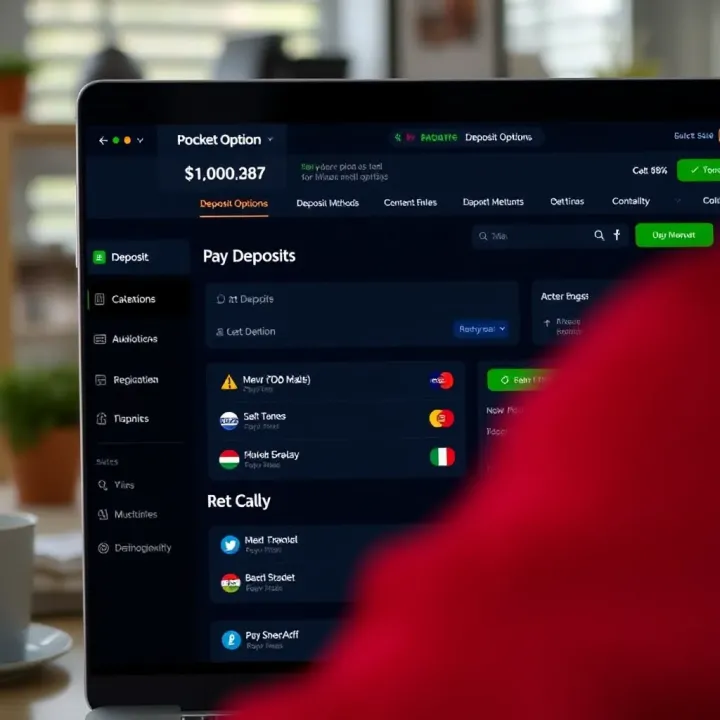
Pocket Option Minimum Deposit Guide for Nigerian Traders
🔥 Learn about Pocket Option minimum deposit for Nigerian traders, including payment methods, security tips, and how to maximise your ₦ investment wisely. 📈
Edited By
Edward Collins
Trading on Pocket Option's demo account offers Nigerian traders a risk-free environment to sharpen their skills. Unlike jumping straight into live trading, the demo account replicates real market movements while using virtual funds, so you can test strategies without losing a kobo.
Pocket Option provides an easy-to-use platform tailored to beginners and experienced traders alike. The demo account allows you to explore various features such as technical indicators, chart types, and different asset classes including forex, commodities, and cryptocurrencies. For instance, you could practice trading the naira-dollar pair or Bitcoin without worrying about market volatility wiping out your capital.

Opening a demo account takes just a few minutes. You simply register with Pocket Option using your email or social media accounts and select the demo mode. This immediate access to ₦1,000,000 virtual funds lets you experiment freely. You get to practise opening, modifying, and closing trades just as you would on a live account.
Using the demo account regularly helps build trading confidence, especially when volatility spikes or market trends shift suddenly. It’s your training ground before handling real money.
Here are key benefits Nigerian traders gain from using Pocket Option demo:
Familiarity with platform tools without the fear of financial loss
Testing various entry and exit strategies to find what suits your style
Monitoring how global events impact different assets, all on a simulated level
Learning to manage risk and set stop-loss or take-profit limits
Many traders waste thousands of naira because they jump into live trading without practice. The demo account helps avoid such pitfalls by allowing you to spot and refine mistakes early. It’s also a space to observe how factors like Nigeria’s foreign exchange rates or crude oil prices might affect your chosen assets.
After gaining enough practice and understanding, you can move to live trading with Pocket Option knowing your approach is solid. The demo account isn't just a trial — it’s the foundation for your trading journey, especially in Nigeria’s dynamic market.
In the following sections, we’ll guide you on setting up your demo account, using it effectively, and transitioning smoothly to live trades with real ₦ at stake.
Starting with a demo account is a smart move for any trader, especially Nigerians looking to enter the online trading scene. Pocket Option's demo account offers a risk-free environment where you can sharpen your trading skills without risking real money. This introduction lays the foundation for understanding how the demo account works and why it matters for your trading journey.
Pocket Option is a popular online trading platform known for its user-friendly interface and wide range of financial instruments, including forex, cryptocurrencies, and stocks. The demo account version mimics the live trading platform but uses virtual funds instead of real naira. For example, a new user might start with ₦1,000,000 in virtual money, allowing them to place trades and test different strategies freely.
This demo account is designed to help traders learn the ropes, get comfortable with the trading tools, and explore market behaviours without the pressure of losing actual funds. It is especially useful for Nigerians who might want to test the platform before committing their hard-earned money given the naira's often fluctuating value and other economic uncertainties.
While the demo account replicates live market conditions in real-time, the key difference lies in the use of virtual funds versus actual money. In demo trading, emotions linked to financial risk are largely absent. This means some traders may take riskier decisions in the demo than they would when real money is involved.
Moreover, demo accounts may not reflect the full impact of slippage or latency that occur in live trading, particularly due to Nigeria’s varying internet speeds. These factors can lead to differences in trade execution and outcomes.
Successful trading involves managing both strategy and emotions. The demo account is your playground for strategies, but live trading requires discipline and risk management.
Understanding these differences helps Nigerian traders set reasonable expectations. It's crucial to use the demo for learning, but also to prepare mentally and financially when transitioning to live trading. For instance, a trader might consistently win in demo but lose in live trades due to fear or hesitation when real naira is on the line.
In summary, the Pocket Option demo account acts as a practical training ground. It lets traders experiment and build confidence while highlighting the need for emotional control and risk management before stepping into real trading.
Setting up a Pocket Option demo account is a critical first step for Nigerian traders who want to try out binary options trading without risking real money. This process offers an accessible way to familiarise yourself with the platform's features and test strategies in a risk-free environment. For many beginners, it’s like practising okada riding in a safe area before hitting Lagos traffic — it builds confidence and skills before the real challenge.
Registering for a Pocket Option demo account is straightforward and takes just a few minutes. First, you visit the Pocket Option website or download their mobile app, both widely accessible in Nigeria via MTN or Airtel data plans. Click on the "Open Demo Account" button, where you'll only need to provide your email address and create a password. Unlike live accounts, the demo doesn’t require Bank Verification Number (BVN) verification or upfront deposits. Once registered, you receive instant access to ₦10,000 worth of virtual funds for practice. This immediacy lets you skip long teething phases common to some platforms and start trading straight away.

Pocket Option’s demo platform closely mimics the live trading interface, making the transition smoother once you're ready for real money trading. The dashboard displays key elements like charts, trade history, and market sentiment indicators clearly. For Nigerian traders who might be monitoring markets on a phone during office breaks or long market days, the platform loads quickly and responds well even on lower bandwidths. Features to explore include various chart styles such as candlesticks and line graphs, tools like RSI, and the ability to customise timeframes. Understanding where these tools sit on the interface helps in making quick decisions during live trading.
You can personalise your demo account settings to align with your trading goals. Adjust the starting balance if ₦10,000 is too small or large for your style, and select different asset types ranging from forex pairs to indices. For instance, some Nigerian traders prefer practising on volatile assets like US$/NGN forex, while others might focus on commodities such as gold. Also, customise the trade expiry times; shorter periods mimic fast-paced trading, while longer expiry suits swing trading practice. These settings allow traders to simulate real market environments that match their strategies and time availability, increasing the value of each practice session.
Starting your Pocket Option demo correctly sets the foundation for effective learning, reducing costly mistakes and boosting your confidence before engaging real funds.
Setting up well is the first step to turning theoretical knowledge into practical trading skills. As a Nigerian trader, taking this time is especially valuable considering factors like naira volatility and market unpredictability. Pocket Option’s demo makes it easier to prepare and sharpen your trading edge without financial stress.
The Pocket Option demo account offers Nigerian traders a valuable space to sharpen their trading skills without risking ₦. This platform behaves like a real trading environment, providing market data and tools that allow you to test strategies safely. Practising in this risk-free setting is key to building confidence and understanding how markets react.
One great advantage of the demo account is the chance to practise any trading strategy, whether you’re trying out scalping or swing trading. For example, you might try entering quick trades on currency pairs like USD/NGN using technical indicators such as moving averages. If the strategy fails, you lose nothing except time, and you can adjust before applying it to a live account. This trial-and-error approach helps avoid costly mistakes when real money is involved.
The demo environment also lets you get familiar with various market indicators and chart tools. For instance, you can explore support and resistance levels or use RSI (Relative Strength Index) to spot overbought or oversold conditions. By practising these techniques, you develop a better sense of how price action behaves in response to news or economic events, such as changes in the Central Bank of Nigeria’s (CBN) monetary policy. This knowledge will prepare you to make more informed decisions when trading live.
Keeping track of your trades on the demo account is crucial for growth. Pocket Option typically allows you to review your trade history and performance metrics. Use this feedback to identify patterns — maybe you take risky trades without enough confirmation or hold losing positions too long. By reflecting on these mistakes, you can fine-tune your approach. Consider keeping a simple trading journal listing your rationale for each trade and its outcome. Over time, this habit brings discipline and clearer insights into what works and what doesn’t.
Practising on the Pocket Option demo account is more than just playing with virtual money; it’s about building the skills and mindset you need to trade successfully in Nigeria’s dynamic markets.
By focusing on these aspects, you turn your demo time into a powerful learning experience that supports real trading success.
Trading with the Pocket Option demo account offers Nigerian traders a valuable way to practise without risking real money. However, this practice environment can also lead to common pitfalls that, if not handled properly, might affect a trader’s readiness for live trading. Understanding these challenges helps Nigerian users set realistic expectations and develop solid trading habits.
One frequent mistake is assuming that success in demo trading guarantees similar results in the live market. The demo account uses virtual funds and lacks real-money pressure, which can make trading feel easier than it actually is. For example, a trader might place riskier trades on demo since losing ₦0 isn’t painful. But in live trading, emotional responses such as fear or greed can influence decisions severely.
To avoid this, treat demo results as a learning tool rather than an exact forecast. Observe how market conditions affect your strategies and use the demo to focus on understanding price actions and timing, rather than chasing unrealistic profit targets. This mindset prepares you to handle real market stress wisely.
Demo accounts often encourage overtrading because there’s no financial loss. Traders might open multiple trades simultaneously or increase trade sizes recklessly, expecting to earn fast returns. In reality, Nigerian market factors like naira volatility and economic news can influence price swings in ways not fully captured in demo environments.
Set clear limits to avoid overtrading: decide the number of trades per session and stick to reasonable position sizes. Also, understand that consistent gains take time—avoid expecting to double demo profits overnight. Discipline here translates directly to better money management when trading with real money.
Demo trading removes the sting of financial loss, which tempts traders to ignore essential risk management principles like stop-loss orders and proper position sizing. Without practising these fundamentals, it becomes a rude shock when switching to live trading.
Always apply risk management even in your demo trades. For instance, limit your exposure to 1-2% of your demo balance per trade, and use stop-loss orders to cap potential losses. This habit ingrains critical skills and prepares you for real trading challenges.
Practising with the Pocket Option demo account is valuable, but recognising and addressing these common challenges ensures your training is effective and your transition to live trading is smoother.
Keep these pitfalls in check to make your demo experience truly educational and relevant to the live market reality in Nigeria.
Moving from a demo account to live trading on Pocket Option is a key step for Nigerian traders looking to turn practice into actual profit. While the demo version offers a risk-free environment to understand the platform and test strategies, live trading involves real money, real emotions, and a different level of discipline. Recognising when and how to make this shift can significantly impact your success.
You should think about switching to live trading once you consistently make profitable trades on your demo account and clearly understand how the platform works. For example, if you’ve practised for at least a month and your trades reflect sound reasoning—rather than just luck—you’re likely ready. Also, if you find the demo account no longer challenges your decision-making or you struggle to treat it as seriously as live trading, it’s time to move on.
It’s wise to avoid rushing just because you want to start earning real money. Instead, assess your readiness objectively, focusing on your strategy’s stability over a minimum of 20–30 demo trades.
Live trading introduces several factors absent in demo accounts. First, emotional impact—seeing real cash fluctuate can cause stress or overconfidence. For instance, Nigerian traders might experience jitters betting ₦50,000 in live trades compared to virtual money in the demo.
Second, market conditions can feel harsher. Live accounts feature actual liquidity, slippages, and variable spreads that the demo may not accurately simulate. Third, execution speed matters more. Packet delays or internet glitches common in Lagos traffic or power outage areas could affect live orders. Lastly, real money means you’ll face risk management challenges—like setting stop losses correctly and sizing your trades consistently.
Managing emotions and money wisely forms the backbone of sustainable live trading. Stick to a clear trading plan that limits daily losses to a small percentage, like ₦5 per ₦100 invested. Avoid chasing losses or getting greedy after a winning streak.
Use practical tools like daily trade journals to track wins and losses objectively, helping you learn without emotions clouding judgment. Before trading each day, remind yourself that losses are part of the process—never trade with money you can’t afford to lose.
Emotional control often separates successful traders from those who falter.
Consider starting live trading with smaller amounts, then gradually increase capital as you gain confidence. Also, using Pocket Option’s features like trade alerts or automatic stop losses can reduce impulsive decisions.
Making the jump from demo to live is both exciting and demanding. By knowing when to step up, understanding the real differences, and managing your emotions and money carefully, you put yourself in a better place for long-term success on Pocket Option.
Closing your journey with the Pocket Option demo account is not just about finishing a trial; it’s about solidifying what you’ve learned to trade confidently in Nigeria’s dynamic market. The demo account serves as a risk-free playground where you can sharpen your skills before stepping into real trading, helping reduce costly mistakes when real money is on the line.
The Pocket Option demo account offers several tangible benefits tailored for Nigerian traders. First, it provides a practical environment to understand trading mechanics without risking your hard-earned naira. For instance, you can explore currency pairs like USD/NGN or commodities relevant to our local market such as crude oil futures. This hands-on practice helps you grasp how market indicators and price action work in real-time.
Beyond skill-building, the demo account familiarises you with the Pocket Option platform’s interface, which is vital given some Nigerian traders face challenges adapting to new digital tools due to inconsistent internet connectivity or limited prior exposure. The demo lets you practise order placement, setting stop-loss or take-profit points, and using charting tools at your own pace. Moreover, this platform experience can save you time and frustration when you switch to live trading, especially considering naira exchange volatility and occasional network hitches.
To maximise demo trading, Nigerian traders should treat it seriously rather than as a guessing game. Set clear goals each time you log in, such as practising a specific strategy or getting better at timing trades. For example, try testing a moving average crossover strategy over multiple days to see its consistency instead of random trades that mimic casino bets.
Also, replicate real trading conditions by limiting your demo capital to amounts you plan to use live. This way, you train your mind to handle realistic risk and reward scenarios. Remember, demo success does not automatically translate to live success—psychological factors like fear or greed appear only when real money is involved.
Lastly, keep a trading journal. Document your trades, the reasons behind them, and outcomes. Reviewing this regularly reveals patterns in mistakes or successes and helps continually improve your approach.
Using Pocket Option’s demo account effectively is like building a solid foundation for a house; without it, your trading structure risks collapsing when faced with real market pressures. Practise with purpose and prepare well to increase your chances of sustainable success on live markets.
By keeping these points in mind, Nigerian traders can turn the Pocket Option demo tool into a practical training ground that sets them apart in a competitive trading environment.
🔥 Learn about Pocket Option minimum deposit for Nigerian traders, including payment methods, security tips, and how to maximise your ₦ investment wisely. 📈
🔍Explore Pocket Option trading in Nigeria! Discover account types, tools, security, pros & cons, plus tips to boost your trading success confidently.
Discover how trading demo accounts help Nigerian traders sharpen skills with virtual money, avoid losses, and prepare for real market risks 📈💡 Trade with confidence in Nigeria.

📈 Discover how binary option trading works in Nigeria, with tips on benefits, risks, regulations, and strategies to trade wisely and stay safe.
Based on 13 reviews