

Ethereum Price Prediction: What to Expect Ahead
📈 Discover Ethereum (ETH) price forecasts and key market factors shaping its future value. Perfect guide for Nigerian investors navigating crypto’s ups and downs.
Edited By
George Davies
Binance Coin (BNB) stands out as one of the leading cryptocurrencies shaping the digital asset market globally and especially within Nigeria's growing crypto community. Since its launch by Binance, one of the world’s largest crypto exchanges, BNB has evolved beyond a simple utility token for trading discounts to an essential asset powering Binance Smart Chain (BSC) and various DeFi projects.
In recent years, Nigerian traders and investors have shown increased interest in BNB, driven by its multiple use cases and integration across exchanges and marketplaces. The token’s performance reflects broader crypto market trends but also depends heavily on factors such as Binance’s regulatory stance, adoption rates of BSC, and network upgrades.

Understanding BNB’s price direction requires analysing technical charts, market sentiment, and fundamental drivers including token burn mechanisms that reduce circulating supply. For example, Binance conducts quarterly burns, permanently removing BNB from circulation, which supports scarcity and potentially uplifts price.
Investors should also weigh risks like regulatory uncertainties in different jurisdictions, market volatility, and competition from other smart contract blockchains when planning exposure to BNB.
Locally, Nigerian investors must consider naira exchange rate impacts, network transaction costs, and how crypto regulations from the Central Bank of Nigeria influence trading and investment in BNB. The naira’s occasional volatility can affect on-chain transactions and liquidity, especially when moving funds between fiat and crypto.
Key points for investors to assess include:
Market Trends: Tracking BNB’s price movements against Bitcoin and Ethereum, as these giants often dictate overall market mood.
Technical Indicators: Using Relative Strength Index (RSI), Moving Averages, and support-resistance levels to time entries and exits.
Fundamental Drivers: Monitoring Binance’s platform developments, new product launches, and community activity on BSC.
Regulatory Environment: Staying updated on the Central Bank of Nigeria’s policies and possible government bans or endorsements.
Accurate price prediction combines these elements rather than relying on speculation. Smart traders typically diversify strategies between short-term trading opportunities and long-term holding, especially for promising assets like BNB with practical utility.
With the crypto space continuously shifting, savvy Nigerian investors must keep an eye on market signals and maintain flexibility to respond to sudden changes in BNB’s outlook.
Understanding Binance Coin (BNB) and its market position is vital for anyone involved in crypto trading or investment, especially within Nigeria’s fast-growing digital economy. BNB serves not just as a digital currency but as a utility token deeply woven into one of the largest cryptocurrency exchanges globally—Binance. Knowing its dynamics helps traders and investors make informed decisions backed by knowledge of the coin’s functionality, market behaviour, and ecosystem role.
BNB was launched in 2017 as an ERC-20 token on Ethereum but later migrated to Binance’s own blockchain, Binance Chain. It started primarily as a means to pay reduced fees on the Binance exchange, which gave it immediate utility and demand. Beyond trading fees, BNB powers Binance Smart Chain (BSC), a blockchain platform focused on decentralised apps and DeFi services. This versatility sets BNB apart and appeals to both casual traders and developers.
For instance, Nigerian crypto users might use BNB to reduce transaction costs when buying Bitcoin or Ethereum on Binance or to participate in DeFi projects operating on BSC. This practical use case supports its value and liquidity.
BNB is integral to Binance’s broader ecosystem, acting as a fuel for transaction fees, a staking asset, and a medium in token sales through Binance Launchpad. It is also used in Binance’s decentralised exchange (DEX) and various partner platforms for payments and offerings.
The token's role as a fee reducer encourages ongoing active use, while Binance’s efforts to conduct regular "coin burns"—where a portion of BNB tokens is permanently removed from circulation—help manage supply and potentially support price appreciation. This strategy resembles central banks' control of money supply but in crypto terms.
BNB's price history reveals substantial growth punctuated by volatility—a common trait across crypto markets. Starting at around US$0.10 in 2017, it surged to over US$600 in 2021 during the crypto market boom. This spike reflected Binance's ecosystem expansion and growing adoption of BSC for decentralised finance.
However, price corrections followed, influenced by global market trends, regulatory challenges, and competition from other blockchains. For Nigerian investors, understanding these cycles is crucial. The sharp price movement means timing matters, and exposure must be managed carefully.
Remember, BNB’s price often correlates with Binance platform’s user growth and crypto market sentiment, so keeping an eye on both will help investors anticipate changes.
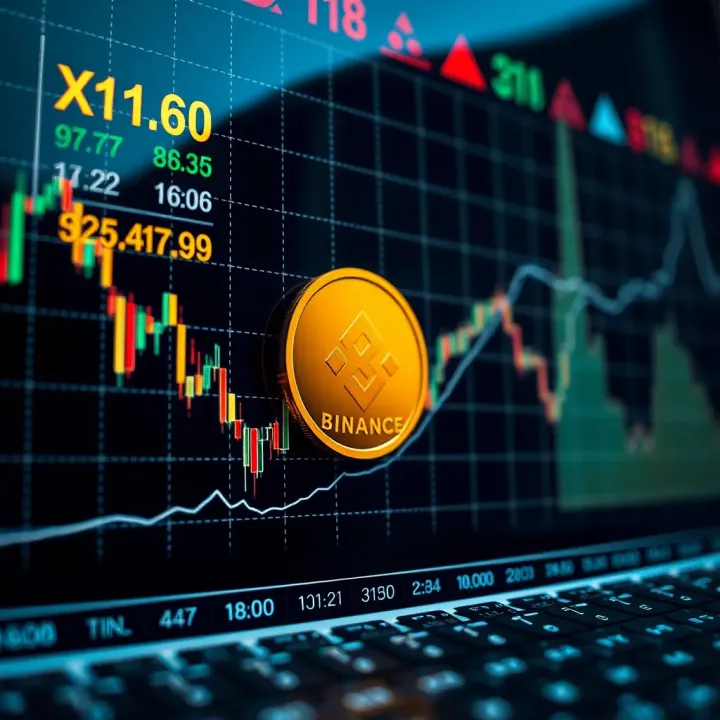
In summary, mastering Binance Coin’s characteristics, ecosystem role, and price history offers traders and investors in Nigeria a clearer edge in navigating this volatile asset. It equips them to spot opportunities and understand risks in the evolving cryptocurrency landscape.
Understanding what moves Binance Coin (BNB) prices is key for investors in Nigeria and beyond. These factors shape how BNB reacts to market conditions, regulatory actions, and technical shifts within the Binance ecosystem. Grasping them can help you make sharper trading decisions or longer-term investment plans.
Market demand directly impacts BNB's price, driven largely by how many people use Binance for trading, staking, or paying fees. In Nigeria, for example, growing interest in crypto has pushed more users towards Binance, especially due to easy access via mobile apps and local payment solutions like bank transfers. When more people buy BNB to access Binance services or hold it for speculation, the increased demand tends to push prices up. Conversely, if interest drops because of market shifts or loss of confidence, BNB's price may fall. This dynamic also ties into the broader adoption of cryptocurrencies — as more Nigerians embrace digital assets for savings or remittances, BNB often benefits from the spillover demand.
Regulation remains a potent factor affecting BNB prices. Nigerian regulators—like the Securities and Exchange Commission (SEC) and Central Bank of Nigeria (CBN)—have periodically tightened crypto rules, including restrictions on fiat-to-crypto transactions and exchange operations. These moves send waves through the market, often leading to price dips or volatility spikes for major coins including BNB. On the international stage, Binance has faced scrutiny from jurisdictions such as the UK, US, and several EU countries. Such regulatory pressures can make investors nervous, affecting BNB’s market value. However, any positive regulatory news or clearer legal frameworks tend to restore confidence and attract new investments.
Changes and improvements on the Binance platform itself can cause BNB price shifts. Because BNB powers many functions on Binance’s exchange, such as paying for fees at a discount or participating in token sales, enhancements that increase platform usability or security tend to boost BNB’s appeal. For instance, the recent upgrade to Binance Smart Chain boosted BNB’s utility by supporting decentralized finance (DeFi) applications, attracting more users. On the other hand, any downtime, security incidents, or loss of user trust due to platform issues can hit BNB’s price hard. Nigerian traders are particularly sensitive to such changes, especially when they coincide with local market events or global crypto trends.
The interplay of demand, regulation, and tech progress shapes BNB’s price movements; recognising these drivers is essential for savvy investment decisions.
In sum, tracking these three factors—market demand, regulatory changes, and platform developments—offers practical insight when predicting BNB’s price movements in the Nigerian crypto scene and globally.
Technical indicators are vital for understanding Binance Coin’s (BNB) price movements. Traders and investors closely watch these tools as they provide data-driven insights on market behaviour, helping to anticipate future trends. In a volatile market like crypto, technical analysis acts almost like a compass, guiding decisions to buy, hold, or sell.
Several tools stand out when analysing BNB’s price. The Relative Strength Index (RSI) gauges if the coin is overbought or oversold; an RSI above 70 often signals overbought conditions, potentially hinting at a price dip ahead. On the other hand, the Moving Average Convergence Divergence (MACD) highlights momentum shifts, illustrating changes in buying or selling pressure. Moreover, Bollinger Bands help spot periods of high or low volatility by marking price boundaries based on standard deviations.
For example, if BNB’s price hits the upper Bollinger Band while RSI is above 70, traders might expect a pullback. Combining these tools provides a more balanced view rather than relying on a single indicator.
Support and resistance levels form the backbone of price prediction. Support marks a price point where demand is strong enough to prevent further decline, acting like a floor. Resistance, conversely, is a price level where selling pressure might halt an upward movement, like a ceiling.
For instance, if BNB repeatedly bounces back at ₦150,000, that price qualifies as a strong support. Meanwhile, if it struggles to surpass ₦200,000, that price acts as resistance. Traders monitor these levels closely because breaking past resistance suggests bullish momentum, while dropping below support may indicate bearish trends.
Price patterns reveal how investor sentiment shifts over time. Common patterns include head and shoulders, double tops or bottoms, and triangles. These help identify possible reversals or continuations in trend.
Trend analysis is as important. An uptrend is confirmed when BNB’s price forms higher highs and higher lows, signalling growing buying interest. A downtrend shows lower highs and lower lows, pointing to bearish sentiments. Understanding these patterns allows investors to time their entries and exits more effectively.
In practice, combining trend analysis with technical indicators like RSI or MACD sharpens predictions about BNB’s price direction.
In summary, mastering technical indicators equips you with a practical edge in navigating BNB’s price fluctuations. By recognising key tools, pinpointing support and resistance, and reading price patterns, you stand a better chance of making informed trading moves in Nigeria's dynamic crypto market.
Expert opinions and forecasts serve as vital guides for traders and investors navigating the often unpredictable Binance Coin (BNB) market. They provide insight grounded in data, experience, and industry trends, helping stakeholders make informed decisions rather than relying solely on guesswork. For instance, an analyst who closely follows Binance platform developments can anticipate how upgrades or policy changes might impact BNB's demand and price.
In the short term, BNB price forecasts tend to focus on immediate market forces like trading volumes, market sentiment, and recent news. For example, a sudden surge in Binance Smart Chain projects or a major partnership announcement usually drives demand, causing the price to rally. Conversely, regulatory crackdowns or technical issues can lead to sharp declines within days or weeks. Specialists often rely on short-term moving averages and momentum indicators to predict these swings, helping traders capitalise on quick profits or avoid losses ahead of volatile periods.
Long-term predictions for BNB factor in broader trends such as Binance’s ecosystem growth, global crypto adoption rates, and regulatory landscapes over years. Experts may look at Binance’s expanding role in decentralised finance (DeFi) and non-fungible tokens (NFTs) to forecast sustained demand for BNB. They also consider macroeconomic factors like inflation or monetary policies affecting liquidity worldwide. For example, if the Nigerian naira remains volatile, crypto assets like BNB could attract more investors seeking to preserve wealth, potentially pushing prices higher in the coming years.
Different analysts often provide varying price forecasts for BNB, reflecting diverse methodologies and outlooks. Some might prioritise technical chart patterns, while others emphasise fundamental factors like Binance’s business strategy. For instance, an analyst using aggressive growth projections might forecast BNB hitting ₦500,000 within five years, while a more cautious expert could see ₦300,000 as a realistic target. Comparing these views helps investors avoid relying on a single narrative and better understand the range of possible outcomes — essential for smart risk management.
Investors should weigh expert forecasts carefully, blending them with personal research and market conditions before making decisions.
Overall, incorporating these expert insights can enhance your trading strategy, giving you a clearer picture of BNB’s potential moves over different timeframes, especially in Nigeria’s evolving crypto scene.
Investing in Binance Coin (BNB) offers various opportunities but carries inherent risks that require careful thought. Understanding these risks is fundamental to making sound investment decisions, especially within Nigeria's dynamic crypto market. This section highlights key factors like volatility, regulatory challenges, and strategies for managing uncertainties effectively.
BNB, like most cryptocurrencies, experiences considerable price swings. These fluctuations stem from factors such as sudden shifts in market sentiment, broader economic events, and changes within the Binance ecosystem. For instance, announcements around Binance’s platform upgrades or restrictions can cause sharp price movements. Nigerian investors should remember that volatility means potential profits come with equally significant risks. A drop or spike could happen overnight, affecting your portfolio’s value seriously. Understanding how to navigate these fluctuations helps avoid panic selling and better positions you to seize good entry points.
Regulation remains a major concern for BNB investors, particularly in Nigeria and globally. The Central Bank of Nigeria (CBN) has periodically restricted direct crypto transactions for banks and financial institutions, impacting liquidity and access to crypto assets like BNB. Such policies can lead to restricted trading volumes or increased transaction costs, which affect market price dynamics. Globally, regulators in the US, Europe, and Asia are tightening rules on digital assets, which could trigger wider market reactions. Investors must stay informed and be ready to adapt, especially since regulatory announcements often catch many off-guard.
To manage risks, diversify your investments across different assets rather than concentrating solely on BNB. Establish clear stop-loss orders to limit downside exposure, particularly in volatile markets. Nigerian investors should also consider their investment horizon—whether short or long term—as this affects tolerance for price swings. Using dollar-cost averaging (DCA) can reduce the impact of timing errors by spreading purchases over time. Furthermore, monitor Binance’s ecosystem developments that may influence BNB’s supply or demand. Remember, no strategy eliminates risk entirely, but disciplined risk management enhances your chances of steady returns.
When you invest in BNB, balancing optimism with caution is the key. Knowing risks upfront protects your capital, especially given the unpredictability of crypto markets in Nigeria and beyond.
In summary, volatility, regulatory frameworks, and disciplined risk management are central considerations for anyone thinking about investing in Binance Coin. These factors shape the market outlook and can define the difference between gains and losses.
📈 Discover Ethereum (ETH) price forecasts and key market factors shaping its future value. Perfect guide for Nigerian investors navigating crypto’s ups and downs.

Explore Arbitrum price trends 📈, tech insights 🔧, expert views 💡, and market risks ⚠️. Stay ahead in Nigeria's crypto space with this detailed forecast.

🔍 Explore detailed XLM price predictions with insights on market trends, tech updates, and expert views to understand Stellar Lumens future potential clearly.

📈 Discover Solana price trends, key market factors, expert views, and risks. Get solid insights on where SOL might head for Nigerian investors and crypto fans. ₦
Based on 12 reviews