

Using Deriv with TradingView: A Guide for Nigerian Traders
🇳🇬 Nigerian traders: Discover how to use TradingView + Deriv together for smarter trades. Learn setup, features, and tips to boost your trading success! 📈
Edited By
Isabella Gray
Trading valuation and smart decision-making hinge on the quality of your charts and analysis tools. For traders in Nigeria, blending TradingView’s advanced charting software with Deriv’s versatile online trading platform delivers a robust way to read the markets and execute trades effectively. This combination opens doors to sharper insights, helping you spot emerging trends and make choices backed by solid data.
TradingView is renowned for its rich set of charting tools, including a wide range of indicators, drawing options, and user-generated scripts. It supports multiple asset classes, which complements Deriv’s diverse product offering like forex, synthetic indices, and commodities. Nigerian traders who often work around unstable power supply and internet hiccups benefit from TradingView’s cloud-based system, allowing uninterrupted access to real-time charts.
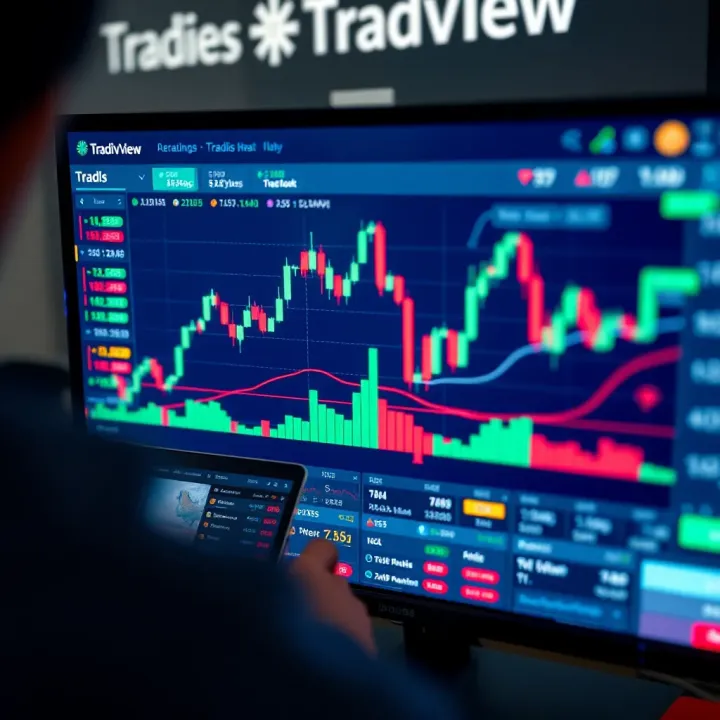
Integrating both platforms means you can prepare your technical analysis on TradingView and place your trades on Deriv without toggling between disparate systems. Plus, Deriv’s modern interface supports quick order entry, letting you react swiftly to signals identified on TradingView. For instance, spotting a Moving Average Convergence Divergence (MACD) crossover on your TradingView chart can prompt an instant trade on Deriv, optimising timing.
Using TradingView alongside Deriv streamlines your workflow. It eliminates the guesswork that comes from switching devices or platforms and brings all your market intelligence into one view.
Set up a free or paid TradingView account, then customise charts with Nigerian market instruments or international pairs you’re interested in.
Open and fund your Deriv account, ensuring you deposit enough to cover your intended trading size.
Use Deriv’s web or app interface to access the trading dashboard.
Keep your TradingView chart open alongside Deriv, analysing patterns and setting alerts that notify you when price moves reach your target.
With this synergy, you stand a better chance of reading local market movements, including oil price fluctuations or currency naira-dollar shifts, which often impact commodity and forex trading on Deriv. Armed with timely and focused information, your trades can improve in both execution and profitability.
This combination is especially useful during the ember months when market activity spikes, and volatility risks rise. Traders who rely on raw intuition alone tend to miss out. Using TradingView’s detailed visuals and Deriv’s quick trade facilities ensures you stay ahead in the game, making your trading less about guesswork and more about strategy and precision.
Traders who want to stay ahead in online trading must understand the tools that offer accurate market analysis. TradingView stands out as a key platform because it combines powerful features with simplicity. Knowing its benefits helps you leverage TradingView effectively alongside Deriv, especially to sharpen trading decisions based on live market data and advanced charting.
TradingView’s charts are highly interactive, allowing you to zoom in on specific timeframes or scroll through historical data easily. You can customise chart types—from classic candles to Renko or Heikin Ashi—depending on your strategy. For example, a Nigerian forex trader analysing GBP/USD might switch to Heikin Ashi to better spot trends during volatile sessions.
These charts also allow drawing tools for trendlines, support and resistance levels, or Fibonacci retracement. Such visual aids are practical for spotting entry and exit points before placing trades on Deriv, where precise timing matters.
The platform offers over 100 built-in technical indicators like moving averages, RSI, MACD, Bollinger Bands, and many more. You can combine multiple indicators to fine-tune your strategy without juggling different tools.
For instance, using RSI to identify overbought conditions combined with MACD crossovers can help confirm signals before executing binary options on Deriv. This saves you time and reduces reliance on guesswork.
TradingView’s user community shares trading ideas and custom scripts daily. These can be valuable to Nigerian traders looking for fresh perspectives or automated strategies.
You might find community-published scripts built to track naira forex pairs or commodities relevant to Nigerian markets. Testing such scripts on TradingView before implementing trades on Deriv can boost your confidence and reduce errors.
TradingView aggregates data from global exchanges, including forex, stocks, commodities, and cryptocurrencies. This access means Nigerian traders can monitor international markets alongside local assets.
Imagine tracking oil prices (important for Nigeria’s economy) on TradingView while trading forex pairs on Deriv. This broader market view helps identify correlations and potential opportunities missed on single-platform analytics.
The platform is designed with an easy-to-use interface. Even traders new to technical analysis find it straightforward to set up charts, apply indicators, and interpret results.
This usability is vital because Nigerian traders often juggle multiple responsibilities and need quick insights without navigating confusing menus. TradingView simplifies this process, allowing more time for decision-making.
TradingView works across desktop browsers and mobile apps available on both iOS and Android. This flexibility suits Nigeria’s mobile-first digital habits where many access the internet via smartphones.
You can analyse markets during your commute on a danfo or while waiting at a mama put, then switch seamlessly to a desktop setup at home to finalise trade plans on Deriv. This cross-device consistency ensures no data or chart setup gets lost.
Using TradingView as part of your trading toolkit opens up clear advantages in analysis and market understanding. It’s not just about data; it’s about how you access, interpret, and apply it for smarter trading through platforms like Deriv.
Deriv stands out as a user-friendly trading platform that provides a rich set of features tailored for diverse traders. Its significance lies in offering a broad scope of trading instruments and practical tools that suit both novices and experienced traders. For Nigerians aiming to capitalise on online markets, understanding Deriv’s functionalities is essential for making informed decisions and aligning strategies with market dynamics effectively.
Deriv offers access to a wide range of assets including forex pairs, indices, cryptocurrencies, and commodities. This broad selection lets traders explore different financial markets without switching platforms. For instance, a trader might simultaneously analyse oil prices and USD/NGN exchange rates to hedge risks or spot opportunities that emerge from their correlation.
By providing multicultural market exposure — from major forex pairs like EUR/USD to volatile cryptocurrencies such as Bitcoin — Deriv equips Nigerian traders with more opportunities to diversify portfolios and mitigate country-specific risks.

Deriv caters to traders with varied budgets and preferences through multiple account types. Whether you prefer a demo account to practise without risk, or a real account with different deposit requirements, Deriv has options. This flexibility ensures beginners can start small without pressure, while advanced traders can opt for accounts with leverage suited to their risk appetite.
Moreover, the platform supports multiple currencies, including Nigerian Naira, allowing easier deposits and withdrawals without frequent currency conversions that bite into profits.
Accurate, up-to-the-minute pricing is the backbone of successful trading. Deriv delivers real-time market data and quick trade execution to help users seize timely opportunities. This is critical for Nigerian traders facing volatile conditions, such as exchange rate swings or unexpected market news, where delays could mean missing out or suffering losses.
The platform’s servers are designed to process orders efficiently, reducing slippage and ensuring your trade happens at the intended price. This responsiveness is vital especially when trading short-term contracts or binary options, where seconds can change the outcome.
Deriv supports several trade types that offer different risk and reward profiles. Binary options provide a simplified yes/no outcome with clear risk boundaries, suitable for traders who want straightforward trades. Forex trading on Deriv gives access to global currency pairs with leverage, enabling higher profit potential but also increased risk.
Multipliers are a recent addition allowing traders to magnify their gains (and losses) by a chosen factor. This tool is handy for those who want exposure to bigger moves without committing large capital upfront. For example, using a 5x multiplier on an asset means your profit or loss is multiplied by five relative to your stake.
Deriv’s SmartTrade interface adds convenience by combining several trading tools into one screen. You can set automatic stop-losses, take-profit targets, and trailing stops to manage trades without constant monitoring. For Nigerian traders juggling other commitments, this automation is a must-have for maintaining discipline and protecting capital.
Additionally, SmartTrade shows profit or loss in real time, giving immediate feedback on market moves. By integrating chart signals and order management in one place, it streamlines the decision process.
Controlling losses is as important as making profits. Deriv implements various risk management features such as guaranteed stop-loss orders, which close your position at a fixed price even if market gaps occur. This feature prevents unexpected deep losses, an important consideration given Nigeria’s sometimes volatile market environment.
Furthermore, account-level risk controls like maximum daily loss limits help traders avoid emotional overtrading—a common pitfall among beginners. Using Deriv’s risk tools effectively can protect your capital, enabling longer-term participation in markets.
Good risk management lets you survive bad days and be ready for profitable ones — Deriv’s tools support this approach practically and efficiently.
Together, these features position Deriv as a strong ally for Nigerian online traders looking to combine smart tools, market access, and risk controls in one platform.
Connecting TradingView with Deriv offers Nigerian traders a powerful way to combine detailed technical analysis with real-time execution. TradingView's advanced charting tools help you spot patterns and trends, while Deriv lets you act on these insights quickly across different markets like forex, commodities, and indices. This link between analysis and trading reduces delays and mistakes, which can improve your overall success.
To begin, create charts on TradingView tailored to the assets you trade on Deriv. For example, if you prefer forex pairs like USD/NGN or commodities such as gold, set your charts to display appropriate time frames — maybe 15 minutes or 1 hour, depending on your style. Customise the chart appearance and candlestick patterns to suit your view; this will make it easier to read at a glance during fast markets.
TradingView offers many indicators. For Deriv traders, focus on tools like the Relative Strength Index (RSI) to identify overbought or oversold marks, Moving Averages for trend direction, and Bollinger Bands for volatility insights. These indicators match Deriv’s common trade types such as binary options or multipliers. By applying the right indicators, you get clearer signals on when to enter or exit trades.
Once your charts and indicators are set, save them as templates in TradingView. This practice saves time for each trading session, allowing you to instantly apply your preferred setup without reconfiguring every element. For instance, save a forex trading layout for those busy days when market moves are lively next tomorrow or during ember months.
Since there's no direct live link between both platforms, the typical method is to perform your technical analysis on TradingView, then manually place trades on Deriv based on that insight. For example, if your TradingView chart shows RSI hitting 30, signalling a possible buy opportunity, you then head to Deriv to execute the trade. This manual approach, while straightforward, demands discipline to avoid missing entry points.
Some traders explore automation by using third-party apps or APIs that connect TradingView alerts with Deriv’s trading system. In Nigeria, the availability of such integration tools is limited but growing. These tools can send automatic trade signals from TradingView to Deriv, reducing reaction time. However, they require technical knowledge and carry risks, so only experienced traders should consider.
To stay efficient, develop a routine that integrates signals from TradingView with your Deriv trades seamlessly. For instance, dedicate specific times during the day for analysis and trading, ensuring that your charts are up to date and that you’re ready to act swiftly when opportunities arise. Keeping consistent notes on chart patterns and trade outcomes helps refine your approach steadily.
Using TradingView and Deriv side by side can increase accuracy and speed in trading, but it needs careful setup and practice. Nigerian traders who master this sync can better navigate volatile markets and safeguard their investments.
By following these steps, you can build an effective workflow that merges TradingView’s analytic strength with Deriv’s trading flexibility. This approach is invaluable for traders aiming to maximise profits while managing risks effectively in the Nigerian trading landscape.
Combining TradingView’s powerful charting tools with Deriv’s flexible trading environment can significantly sharpen your trading edge. To get the most out of both, you need practical strategies and risk controls that fit your trading style and market conditions. This section offers clear, actionable advice to help Nigerian traders improve decision-making, manage risks effectively, and build habits that boost long-term success.
Using TradingView’s technical indicators alongside Deriv’s trade types allows you to tailor your trades to the signals you see. For example, if you spot a strong bullish trend from Moving Average Convergence Divergence (MACD) and Relative Strength Index (RSI) readings on TradingView, you might choose Deriv’s binary options to place a call option anticipating further upward movement. Conversely, a Multipliers trade on Deriv suits volatile situations where price swings meet signals from Bollinger Bands or Average True Range (ATR), letting you profit from leverage without owning the underlying asset.
Testing which indicators work well with specific Deriv asset classes—whether forex, commodities, or synthetic indices—helps refine your strategy. This approach also aligns your trade choices with your risk appetite and time frame, leveraging TradingView’s data for sharper entry and exit decisions.
Chart signals on TradingView provide valuable cues about when to start or close trades on Deriv. For instance, a crossover of short-term and long-term moving averages often signals a trend change. Acting promptly on such signals can improve entry timing, avoiding chasing prices or entering too late.
Similarly, divergence between price and indicators like RSI can warn of a potential reversal. Recognising these hints helps you set realistic take-profit and stop-loss points on Deriv, preserving capital and locking gains. The key is not just spotting signals, but syncing your trade execution with them in real time.
Before risking cash, you can use TradingView’s backtesting feature to test your trading ideas against historical data. For example, simulate using Stochastic Oscillator to trigger trades on a Deriv synthetic index over past months. If the strategy shows consistent positive returns and manageable drawdowns, it’s worth applying in live markets.
Backtesting helps weed out weak setups and adapt your strategy to current market behaviour. It also gives you confidence because you know how your approach performed under various conditions—something invaluable for the volatile Nigerian market influenced by currency swings and news.
Risk management is key when trading on Deriv, especially with leveraged instruments like Multipliers. Use TradingView’s charts to identify support and resistance zones to place stop-loss and take-profit orders. For example, if a price consistently bounces off a ₦700 resistance level, setting stop-loss slightly below this on Deriv can limit losses if the market suddenly turns.
Clear exit points prevent emotional decisions during rapid market moves, protecting your capital from sharp losses common in online trading.
Overtrading drains both your wallet and focus. The availability of multiple trade types and fast execution on Deriv tempt traders to enter many positions impulsively. Resist this urge by relying on strong signals from TradingView—not just random price moves.
Stick to your strategy, trade selectively based on verified setups, and take breaks when results dip. Quality trades focused on well-researched entries beat numerous impulsive trades that quickly erode funds.
Keeping a trading journal helps track performance and learn from errors. Record your reasoning for each trade, the indicators used, entry and exit points, and outcomes. Over time, you’ll spot patterns in what works and what doesn’t across both platforms.
Discipline in following your strategy and reviewing results cultivates steady improvement. In a market like Nigeria’s that can be unpredictable due to local and global factors, disciplined record keeping empowers better decisions and avoids costly habits.
Proper use of TradingView combined with Deriv’s trading options can boost your efficiency. But it takes dedication to plan trades, control risk, and keep track of performance to succeed in the long run.
Following these tips will equip you with a robust foundation to trade smarter, not harder, in Nigeria’s dynamic online trading space.
Access to reliable resources is a key advantage for Nigerian traders using TradingView alongside Deriv. These resources provide vital support, from community advice to regulatory updates, that can sharpen your trading strategies and keep you informed about market conditions specific to Nigeria. Leveraging local knowledge and tools often makes the difference between guessing and trading with confidence.
In Nigeria, various active trading groups exist on platforms such as Facebook, Telegram, and WhatsApp. These groups offer a place to exchange ideas, share TradingView chart setups, and discuss Deriv trade strategies relevant to local markets. Being part of such communities helps you stay updated with developments like naira volatility or CBN policy changes. Traders often post real-time technical setups, which can inspire new approaches or reinforce your analysis.
Beyond the exchange of tips, these communities serve as support networks for tackling challenges common among Nigerian traders—such as payment gateway issues or platform glitches. Joining groups with a focus on forex, binary options, or multipliers on Deriv ensures that discussions remain relevant and practical.
Nigeria has seen a rise in trading education platforms offering courses tailored to both beginners and experienced traders. Online workshops specifically addressing TradingView’s charting tools and Deriv’s platform functionalities are increasingly popular. These training sessions break down complex topics like indicator combinations or trade timing into digestible lessons.
Participating in webinars hosted by Nigerian trading educators helps you adapt global strategies to local market peculiarities. Some workshops also cover risk management techniques that suit the often volatile Nigerian trading environment. For instance, the importance of setting stop-loss limits grows when the naira faces sudden pressure.
The Central Bank of Nigeria (CBN) website is a critical resource for traders needing official updates on monetary policy, forex restrictions, and other regulatory actions that impact trading environments. Regularly checking CBN statements helps traders anticipate moves that could affect asset prices or liquidity on platforms like Deriv.
Since trading regulations and currency controls often change without much notice, staying informed via the CBN website reduces surprises. For example, during periods when the CBN tightens forex availability, traders relying on foreign currency deposits must adjust their strategies accordingly.
Several Nigerian financial news websites and portals deliver timely analysis on markets influencing Deriv assets — including equities, forex, and commodities. Sites like BusinessDay, Nairametrics, and Proshare provide insights into economic events, corporate earnings, and political developments shaping market sentiment.
Using these platforms alongside TradingView charts offers traders a fuller picture, blending technical data with fundamental news. For instance, a disruption in oil production reported on these portals can be immediately reflected in energy-related charts, nudging traders to adjust their positions.
Consistent use of local resources enhances your ability to make informed trading decisions and manage risks effectively in Nigeria's dynamic market environment.
🇳🇬 Nigerian traders: Discover how to use TradingView + Deriv together for smarter trades. Learn setup, features, and tips to boost your trading success! 📈
📊 Discover how Nigerian traders can boost their market insights by using TradingView and Deriv together. Get practical tips to trade smarter and stay ahead! 🇳🇬

Explore how Nigerian traders can master TradingView on Deriv.com 📈 Learn setup, charts, technical analysis, risk management & trading tips for success 🇳🇬

📊 Compare TradingView and Deriv.com to find the best trading platform for Nigerian traders. Discover tools, features, and support for smarter trading decisions!
Based on 7 reviews