
Understanding USD to NGN Exchange Rate Effects
Explore how USD to NGN exchange rate shifts affect Nigeria's economy and daily life🇳🇬💱. Get insights on managing currency risks effectively.
Edited By
Emily Carter
Today's outlook for the GBP/USD exchange rate centres firmly on recent shifts in both economic indicators and geopolitical events. Traders and investors should expect heightened volatility as the British Pound continues to grapple with inflation concerns and the US Dollar reacts to Federal Reserve policy signals.
The Pound has recently faced pressure following weaker-than-expected UK inflation data, which fell below the Bank of England’s target. Traders monitoring this may see this as a hint that interest rate hikes might slow, affecting the Pound’s appeal. On the other hand, the US Dollar gained some ground amid strong labour market numbers and hawkish comments from the Federal Reserve, reinforcing its status as the world's premier safe-haven currency.

For forex participants, closely watching economic releases such as the UK Consumer Price Index (CPI) and US Non-Farm Payroll (NFP) reports today will be essential to anticipate price swings in the GBP/USD pair.
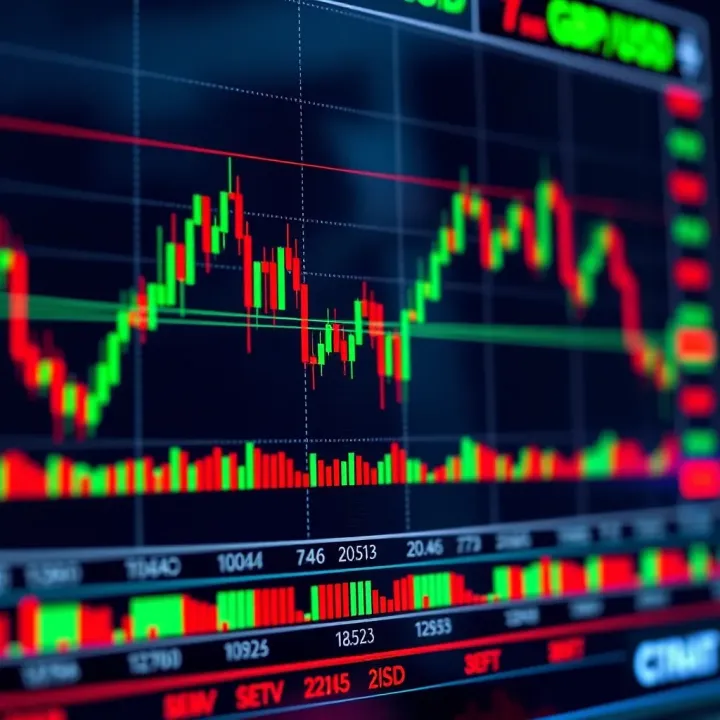
Technical indicators show a mixed picture: the 50-day moving average has recently crossed below the 200-day moving average, a bearish sign known as the "death cross". Yet, momentum oscillators like the Relative Strength Index (RSI) suggest an oversold condition, hinting at a possible short-term rebound.
Key factors influencing today's GBP/USD movements include:
UK economic data: inflation rates, wage growth, and retail sales
US monetary policy updates: Fed interest rate decisions and economic projections
Brexit-related developments: ongoing trade negotiations or regulatory announcements
Global risk sentiment: shifts in appetite for safe assets amid geopolitical tensions
For traders, taking note of support levels around 1.2500 and resistance near 1.2650 can help set realistic entry and exit points. Additionally, Nigerian forex investors should consider how volatility might affect naira valuations when converting profits or losses from the GBP/USD market.
In sum, today's GBP/USD outlook reflects the tug-of-war between divergent economic realities in London and Washington, along with technical clues that suggest traders should prepare for rapid shifts. Staying updated on real-time news and economic releases remains critical for anyone looking to make informed decisions in the forex market today.
Understanding current market trends is vital to grasp where the GBP/USD pair is heading. These trends reflect the immediate forces pushing or pulling the exchange rate. Traders and investors need to keep an eye on them so they can time their entries and exits better, avoiding unnecessary losses amid sudden swings.
The pound has shown some resilience this week, bouncing back slightly after a dip below the 1.24 mark against the dollar. Meanwhile, the dollar has generally stayed firm, benefiting from cautious sentiment after recent US data suggested stronger-than-expected economic growth. This seesaw effect means traders must watch closely; for instance, a sudden political announcement in the UK could quickly halt the pound’s mini rally.
Economic data released recently in both countries directly influenced these moves. The UK's inflation figures and unemployment rates shaped the pound’s weaker moments, while US consumer spending and job report improved dollar demand. When UK jobless claims increased unexpectedly, the pound lost some ground, alerting investors to possible monetary tightening delays by the Bank of England. Similarly, strong US retail sales hinted that the Federal Reserve could stay hawkish, boosting the dollar.
Global events also play a significant role. For example, ongoing geopolitical tensions involving China and the US have caused bouts of volatility in forex markets, including GBP/USD. A rise in safe-haven demand during such uncertainty often lifts the dollar against most currencies, including the pound, affecting short-term trading strategies.
Risk appetite among investors strongly influences GBP/USD dynamics. When investors feel confident, they tend to favour higher-yielding assets like the pound, pushing its value up. However, during times of global uncertainty, such as a sudden crisis or trade row escalation, the dollar attracts safe-haven flows, causing the pound to slip. This seesaw in sentiment can create opportunities for day traders who monitor news closely.
Speculative activity also adds to daily swings. Forex markets attract huge leverage, and when major players – hedge funds and speculative traders – pile into a currency based on technical signals or economic forecasts, it can lead to exaggerated moves. For instance, in the last few sessions, increased speculative interest around Bank of England policy hints caused sharp price fluctuations even before official announcements. Traders should factor in such behaviours by setting stop-loss orders wisely to manage risk.
Monitoring market trends including recent performances, economic data, global events, and investor behaviour can provide practical insight for making strategic decisions in GBP/USD trading.
In summary, keeping abreast of current market trends offers a clearer view of potential GBP/USD movements. Nigeria-based traders, especially, can benefit by combining these insights with local forex platform features and naira exchange trends to optimise their positions.
Economic indicators play a major role in determining the direction of the GBP/USD exchange rate. Traders and investors closely watch these economic data releases since they offer concrete insights into the health of the UK and US economies. This information helps market participants gauge the likely moves of the pound and dollar in the short term, making it essential for formulating trading and investment strategies.
Inflation rates and Bank of England policy
Inflation figures reflect the pace at which prices for goods and services rise in the UK. When inflation climbs above the Bank of England's 2% target, there’s increased pressure on the central bank to tighten monetary policy by raising interest rates. For example, a higher-than-expected inflation report might prompt the Bank of England to signal rate hikes, which usually strengthen the pound as investors seek higher returns.
Employment data and GDP growth
Regular reports on employment levels and GDP growth offer a snapshot of the UK's economic performance. Rising employment numbers generally indicate a growing economy and boost confidence in the pound. Similarly, if GDP growth exceeds forecasts, it often leads to a stronger pound. Conversely, weak data can cause the pound to dip, as concerns grow over economic slowdown.
Brexit-related developments
Brexit continues to influence sentiment around the pound, especially with talks on trade agreements and regulatory frameworks still ongoing. Any news of progress or setbacks quickly move the GBP/USD rates. For Nigerian traders, following UK parliamentary discussions or trade negotiation updates can provide early warnings to adjust positions accordingly.
Federal Reserve interest rate moves
Decisions by the US Federal Reserve (Fed) on interest rates have a direct impact on the dollar’s strength. An interest rate hike tends to attract foreign capital, supporting the dollar against the pound. Traders watch closely the Fed’s announcements and minutes, particularly any change in stance towards tightening or loosening monetary policy. For instance, if inflation remains high in the US, the Fed may raise rates sooner than expected, pushing the dollar higher.
Jobs reports and consumer spending
US non-farm payrolls and consumer spending data provide crucial insight into economic momentum. Robust job creation usually leads to greater consumer confidence and spending, which is positive for the dollar. Weak jobs data signals potential economic weakness, which can drag the dollar lower. Nigerian investors tracking these numbers can time entry and exit points around their release.
US-China trade tensions and global factors
Trade relations between the US and China, plus other global influences like geopolitical risks, affect the dollar’s safe-haven status. Rising tensions often prompt investors to flock to the dollar as a secure asset, lifting its value against the pound. Conversely, ease in trade disputes may reduce demand for the dollar. Nigerian traders should watch these developments as they often coincide with volatility spikes in the GBP/USD pair.
Keeping an eye on these economic indicators daily gives traders a practical edge in anticipating GBP/USD movements, enabling smarter decisions suited to fluctuating market conditions.
Technical analysis plays a key role in understanding the GBP/USD pair, especially when economic news alone does not give a full picture of market direction. It helps traders spot price trends, predict potential reversals, and make data-driven decisions in today’s volatile forex market. Nigerian traders, for instance, often combine this analysis with fundamental factors to size positions and set entry or exit points smartly.
Recent price action patterns give insights into how GBP/USD has behaved in the short term. For example, if the pair consistently struggles to break above ₦1.56 (about $1.20), this level acts as a resistance point where sellers step in. Similarly, repeated bounces off ₦1.45 (around $1.12) highlight a support level where buyers defend the price. Recognising such patterns lets you anticipate whether the market will stall, rally, or drop further.
Understanding key technical zones to watch today means zeroing in on these price levels that historically influence market moves. Take the zone between ₦1.50 and ₦1.52; this range has recently served as both support and resistance, creating a psychological battlefield for traders. Monitoring these zones during active trading hours helps spot breakouts or pullbacks, important for timing your trades and managing risk effectively.
Moving averages and RSI readings are popular indicators for forex traders tracking GBP/USD trends. A 50-day moving average crossing above the 200-day moving average is often seen as a bullish sign, suggesting upward momentum. On the other hand, if the Relative Strength Index (RSI) exceeds 70, it flags overbought conditions, warning traders of a potential price correction. These tools help avoid chasing trades during extreme moves, which is crucial in a fluctuating market.
Trend lines and candlestick formations provide yet another layer of analysis. An upward sloping trend line connecting recent swing lows confirms a bullish bias, while a breakdown below it can signal an early sell-off. Candlestick patterns like the "Hammer" or "Shooting Star" often indicate key reversal points. Paying attention to such formations, especially during volatile sessions influenced by UK or US data releases, equips traders to act promptly.
Technical analysis of GBP/USD sharpens a trader’s edge by pinpointing critical price levels and momentum signals. Coupled with awareness of economic events, it forms a solid basis for confident trading decisions.
To sum it up, mastering support and resistance levels alongside key indicators such as moving averages, RSI, trend lines, and candlestick patterns will help you navigate GBP/USD’s shifting terrain confidently. This approach is especially vital for Nigerian traders who contend with local factors like naira exchange swings and broker conditions while trading this heavily followed pair.
Expert opinions and forecast scenarios play a key role in understanding how the GBP/USD pair might behave in the near term. Traders and investors rely on these insights because they bring together complex market data, economic indicators, and geopolitical developments into digestible predictions. Listening to experienced forex analysts helps you identify potential price movements and prepare for different market scenarios without being caught off-guard.
Short-term outlook for GBP/USD
Most leading analysts expect the GBP/USD to trade with slight volatility today, influenced by upcoming UK inflation data and US Federal Reserve announcements. For instance, if the Bank of England hints at tightening monetary policy, sterling could see modest gains against the dollar. Conversely, better-than-expected US jobs data might strengthen the dollar, pushing the pair downwards. Traders should watch closely how these reports shape movements within the day.
Factors that could alter the forecast
Several factors can quickly change analysts’ short-term predictions. Unexpected UK political news, such as shifts in Brexit negotiations or fiscal policy changes, could sway the pound sharply. On the US side, sudden shifts in trade relations or fresh stimulus plans might boost the dollar unexpectedly. Also, global tensions like rising oil prices or geopolitical conflicts can trigger risk-off sentiment, impacting safe-haven demand and therefore the GBP/USD rate.
Volatility triggers to watch
Today’s key volatility triggers include the UK Consumer Price Index release and the US Federal Open Market Committee (FOMC) commentary. These events often cause sharp price swings, especially if figures differ markedly from expectations. For Nigerian traders, such volatility means opportunities but also risks; sharp moves might quickly wipe out small account balances if risk isn’t managed correctly.
Trading strategies based on forecast
Given current forecasts, a balanced approach suits many traders. Short-term scalping around major data releases could capture quick profits in volatile sessions, while swing trading based on technical support and resistance levels offers steadier gains over a few days. Incorporating stop-loss orders is essential to guard against sudden reversals. Nigerian traders should also factor in naira fluctuations when deciding position sizes, as local currency volatility can amplify overall risk.
Staying informed on expert opinions and preparing for multiple scenarios equips you to navigate today’s GBP/USD market confidently and prudently.
For Nigerian traders, understanding how to approach the GBP/USD market today is critical. The forex market’s volatility combined with local economic factors means there is both opportunity and risk. Navigating this space effectively requires using trusted local brokers and platforms, alongside strong risk management practices tailored to the dynamics of naira movements.
Trusted Nigerian brokers for GBP/USD trading play a vital role. Brokers like FXTM Nigeria and Alpari Nigeria are popular choices due to their local presence, easy access to funding and withdrawals in naira, and customer support tailored to Nigerian traders. Using reputable brokers ensures smoother trade execution and reduces exposure to scams common with unregulated operators. Furthermore, local brokers often provide platforms integrated with mobile banking apps from Nigerian banks, making transaction settlement more efficient.
Regulations and compliance considerations cannot be overlooked. The Nigerian Securities and Exchange Commission (SEC) oversees forex trading to ensure transparency and protect investors. Trading through brokers regulated by the SEC helps Nigerian traders avoid dubious operators and comply with local tax and reporting requirements. It also means access to dispute resolution mechanisms if challenges arise, which can be critical when markets move fast. Traders should verify broker licences and ensure their platform complies with Nigerian trading laws before committing funds.
Effective stop-loss and take-profit methods are essential for protecting capital amid GBP/USD swings. Setting stop-loss orders prevents losses from ballooning when the market suddenly moves against a position, while take-profit levels lock in gains without the need for constant monitoring. For instance, if you buy GBP/USD at 1.2500, placing a stop-loss at 1.2450 limits loss to 50 pips, and a take-profit at 1.2600 secures potential gains of 100 pips. This disciplined approach helps dampen the emotional impact of volatility common during economic announcements or geopolitical events.
Impact of naira fluctuations on trading decisions adds a local dimension to GBP/USD trading. Since the naira is often volatile due to fuel subsidy changes and forex scarcity, the effective cost of trading pairs like GBP/USD can change unexpectedly. Traders need to factor in the local exchange rates when converting trading profits or losses back to naira. For example, a ₦5 million return at one exchange rate might significantly differ in naira value if the naira weakens against the dollar just days later. Understanding this can help Nigerian traders decide when to enter or exit trades and how to size positions relative to their capital in naira terms.
Nigerian traders who combine reliable local brokers with sound risk management techniques tailored to naira dynamics position themselves better to capitalise on GBP/USD movements while safeguarding their capital.
By following these practical steps, Nigerian traders can navigate today’s GBP/USD forex market more confidently and improve their chances of profitable outcomes.
Explore how USD to NGN exchange rate shifts affect Nigeria's economy and daily life🇳🇬💱. Get insights on managing currency risks effectively.

🔍 Stay updated on XAUUSD today! Explore gold price trends influenced by economic data, geopolitics, and currency moves for smart trading decisions. 💰

📊 Explore the USD/JPY forecast with insights on economic trends, central bank moves, geopolitical impacts, and technical analysis for smart trading decisions.

💰 Explore XAU/USD forecast with key gold price drivers: economic data, geopolitics, and market trends. Stay ahead in Nigeria’s gold market today!
Based on 6 reviews