
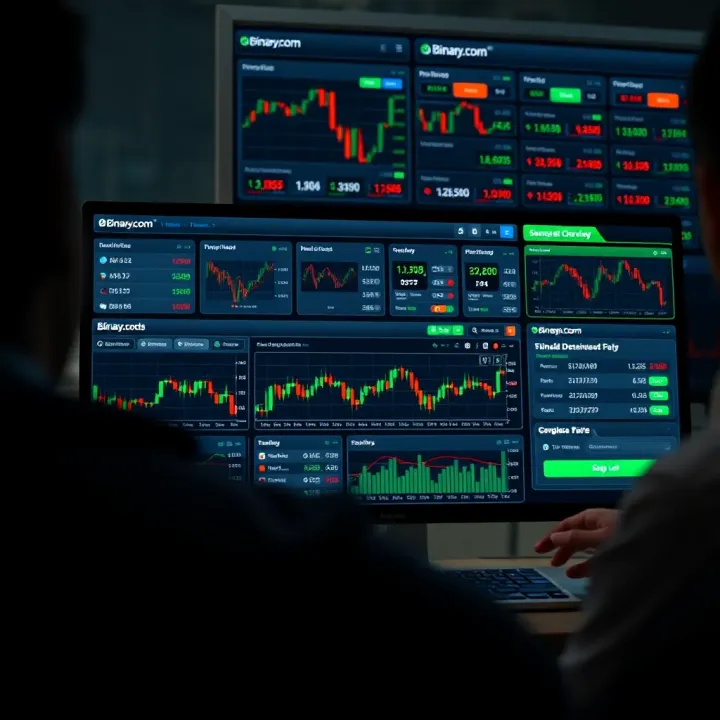
Understanding Binary.com for Nigerian Traders
Explore Binary.com trading in Nigeria 🇳🇬: setup, security tips, and trading types. Get ready to trade smarter with practical advice and insights! 💼📊
Edited By
James Whitmore
Prop firm challenges have become a popular pathway for Nigerian traders looking to access larger trading capital without risking their own money from the start. These challenges, typically organised by proprietary trading firms, test a trader's skills under specific rules. The goal is clear: pass the challenge and secure funding to trade professionally.
In Nigeria’s trading scene, where capital often limits potential, free prop firm challenges offer a practical alternative. Unlike paid challenges that can cost ₦50,000 or more, free challenges remove this upfront barrier, making them attractive to traders who want to prove themselves without financial risk.

Understanding how these challenges work can save you time and effort. Usually, they involve hitting certain profit targets while controlling drawdowns over a fixed period, such as 10 to 30 days. For example, a challenge might require growing a demo account by 10% with no more than 5% maximum loss. Traders must show discipline and strategy to meet these targets.
The benefits are not just about capital access. Successfully passing a free prop firm challenge can also boost your trading credibility, opening doors to more advanced trading opportunities or even roles within the prop firm. It’s a chance to learn trading discipline under a realistic but monitored environment without risking your hard-earned money.
That said, free prop firm challenges often come with conditions. Many require Nigerian traders to verify their identity using BVN (Bank Verification Number) or other documents. Performance monitoring and adherence to risk rules are strict because the firm wants to minimise losses. There’s also usually a profit split model, where you keep a percentage of the profits earned from the funded account.
Passing a free prop firm challenge isn’t just about hitting numbers — it’s about proving your consistency, risk management, and ability to trade under pressure.
Before jumping in, consider if your trading style aligns with the challenge rules and if you’re ready to handle the pressure within a limited timeframe. Next sections will unpack the detailed steps, requirements, and tips to help Nigerian traders navigate these challenges successfully.
Free prop firm challenges have become getting popular among Nigerian traders looking to access trading capital without risking their own funds. This section breaks down what these challenges are, why they matter, and how they differ from the usual paid challenges.
Proprietary trading firms, or prop firms, provide capital for skilled traders to operate financial positions using the firm’s money instead of personal funds. They earn profits by sharing generated returns with these traders. This setup allows individuals without large capital to still trade in global markets like forex, stocks, or commodities.
For example, a trader in Lagos may pass a prop firm’s evaluation and gain access to ₦5 million trading capital, far beyond what most retail traders could afford. This reduces personal financial risk while potentially increasing profit opportunities.
Free prop firm challenges serve as a test to assess whether traders can meet specific profit targets and follow risk rules by trading on demo accounts. Unlike traditional schemes requiring upfront fees, free challenges eliminate the initial financial barrier, making the opportunity more accessible.
The main aim is to identify talented traders who can be funded by the firm without requiring payment for entry. For Nigerians, where starting capital is often limited, such challenges open doors. Successfully completing the challenge can lead to a funded account where traders operate real money with profit sharing.
The dramatic difference with free challenges lies in the cost structure. Paid challenges usually ask traders to pay fees ranging from ₦50,000 to ₦200,000 just to participate. These fees cover evaluation costs and sometimes contribute to the initial trading capital but create upfront financial risk.
Free challenges remove this barrier by demanding no entry fee, although some might set strict trading rules that require careful attention. This is particularly advantageous for Nigerian traders conscious of naira value fluctuations and limited access to disposable funds.
Paid challenges tend to have higher entry barriers due to both cost and stricter criteria for success. Some firms require traders to demonstrate previous trading experience or pass preliminary screenings. This narrows chances for new or casual traders.
In contrast, free prop firm challenges lower these hurdles. They provide equal footing regardless of background, often including tutorials or community support to boost chances of success. Thus, Nigerians venturing into trading can test their skills and discipline without financial pressure or complex preconditions.
Free prop firm challenges have reshaped how Nigerian traders can access professional trading capital, making it more about skill than money upfront. This readily opens opportunities for dedicated, smart traders.
Understanding the basics of these free challenges sets the stage for exploring how they operate and what to expect in subsequent sections.
Understanding how free prop firm challenges function is key for Nigerian traders aiming to access professional trading capital without upfront costs. These challenges offer a structured path to prove trading skills under specific rules, helping traders secure funded accounts if they meet set targets. For instance, a trader in Lagos might enter a free prop challenge, trade according to given guidelines, and upon success, receive funds from the firm to trade larger positions.
Eligibility criteria usually require participants to be adults with basic trading experience. Some firms may ask for a minimum understanding of forex or stocks, while others might accept total beginners willing to learn. Practical relevance lies in ensuring traders are prepared to follow rules and have the discipline required. Nigerian traders, in particular, should check if there are any country restrictions or if local regulations affect participation.

Documentation needed often includes identity verification such as a valid government-issued ID (e.g., National Identity Number (NIN) card or driver's licence), proof of residence, and sometimes proof of trading experience or education. This safeguards the prop firm against fraud and complies with anti-money laundering rules. For Nigerian applicants, having a BVN (Bank Verification Number) and a linked bank account can help streamline the process.
Typical profit targets vary by the challenge but generally require traders to reach a modest profit percentage within a set trading period—say 5% profit in 30 days. This approach tests consistent profitability rather than luck. For Nigerian traders, understanding these targets is crucial, as meeting them under local market conditions, including naira volatility, calls for sound strategy.
Risk management guidelines play a vital role, often limiting daily loss or maximum drawdown to protect funds. For example, a challenge may set a 2% daily loss limit to encourage disciplined trading. Following these structures not only helps traders avoid devastating losses but also reflects professional risk control that prop firms expect before providing funding.
Assessment period refers to the time traders have to meet targets and comply with rules. It can range from two weeks to a month or more. The timeframe lets traders demonstrate consistent performance, not just a single lucky trade. Nigerian traders should plan their trading days around this period, considering market hours and local events that may affect volatility.
Receiving funded accounts happens once the trader passes the evaluation. The prop firm transfers control over a real trading account with significant capital. The trader then shares profits, usually around 70-80%, while managing risk as previously agreed. This step is a major milestone, offering Nigerian traders the chance to scale up beyond their personal capital and develop trading careers without the need for sizeable personal funds.
Joining and succeeding in a free prop firm challenge demands discipline, adherence to guidelines, and effective trading strategies. Yet, it serves as a practical gateway for Nigerian traders to manage large funds and grow their trading skills safely.
Joining a free proprietary (prop) firm challenge offers Nigerian traders several practical benefits that can kickstart or boost their trading careers without heavy upfront investment. These advantages help traders access professional trading capital, gain real-market experience, and manage risks better — all crucial in a market where capital and resources can be scarce.
No need for upfront capital: One of the biggest draws of free prop firm challenges is that you do not have to put up your own money to compete. For many Nigerian traders, gathering enough startup capital can be a big hurdle, especially when the naira fluctuates and inflation impacts savings. These challenges let you demonstrate your skills first, then earn access to firm funds if you pass the test. This means you can trade without risking your hard-earned naira initially.
Lower financial exposure: Since you’re not using personal funds, the risk of losing your money during the evaluation is eliminated. Losing personal capital can be a serious setback, especially in an economy where alternative income streams may be limited. By participating in a free challenge, you limit losses to only your time and effort, which makes learning and experimenting with strategies less stressful.
Trading with bigger funds: Free prop firm challenges often grant access to trading accounts funded with amounts significantly higher than what most retail Nigerian traders can afford alone. For example, while a typical individual might trade with ₦50,000 to ₦100,000, prop firms may provide capital running into millions of naira. This opens up opportunities to trade larger volumes and diversify positions that would otherwise be impossible.
Potential for higher profits: Bigger funds mean that successful trades can yield bigger returns. Even small percentage gains on larger amounts translate to sizeable profits in naira. For traders in Nigeria, where growing a portfolio quickly is often desirable to stay ahead of inflation and market volatility, this advantage can significantly change the game.
Real trading experience: Unlike demo accounts that simulate the market but lack real risks and emotions, free prop firm challenges require you to trade live market conditions with real funds (the firm’s, not yours). This exposure sharpens your decision-making under pressure and familiarises you with trading platforms like MetaTrader or cTrader used widely by prop firms.
Feedback and improvement: Many prop firms provide periodic reports or insights showing how you performed during the challenge. This constructive feedback lets you identify strengths and weaknesses in your trading strategy. For instance, you might learn to spot when your risk controls slipped or what timeframes suit your style best, allowing gradual improvement before you are allocated significant capital.
Taking part in free prop firm challenges is a smart way for Nigerian traders to build skills and grow trading capital without upfront costs, while learning to manage risk properly.
These advantages illustrate why free prop firm challenges have become popular among traders in Nigeria looking for accessible ways to break into the world of professional trading.
Understanding the key requirements and common restrictions of free prop firm challenges is essential for Nigerian traders aiming to succeed without surprises. These rules set clear boundaries on how traders operate, protecting both the firm’s funds and the trader’s career. Knowing these conditions upfront helps you choose challenges that fit your style and avoid disqualification.
Most free prop firms offer challenges on widely used trading platforms like MetaTrader 4 (MT4), MetaTrader 5 (MT5), and TradingView. These platforms are familiar to many Nigerian traders and come with robust charting tools, custom indicators, and access to diverse markets. For example, MT4 remains popular due to its user-friendly interface and wide broker support.
Choosing a challenge that supports your preferred platform reduces the learning curve, so you can focus on trading rather than navigating unfamiliar software. Since some Nigerian traders also explore mobile-first apps like MetaTrader Go for trading on the move, confirming platform compatibility beforehand is wise.
Free prop firms typically allow trading in forex pairs, indices, commodities, and sometimes cryptocurrencies. Forex majors like EUR/USD and GBP/USD are common staples. Some firms restrict trading to specific assets during the challenge to control risk, while others offer a broader selection.
Having access to asset types you understand improves your chances. For example, a trader focused on oil markets may benefit from firms that offer Brent crude futures. Nigerian traders should also consider volatility differences; the naira’s fluctuations do not directly impact forex majors but can influence USD/NGN-linked products.
Most free prop firms set a maximum drawdown limit — the largest loss allowed before automatic challenge failure. This could be a fixed amount or a percentage of the starting capital. Staying within this limit is crucial; crossing it means losing any chance of funded trading.
For instance, a ₦10 million funded account might have a 5% max drawdown, meaning losses should never exceed ₦500,000. Nigerian traders must keep an eagle eye on this rule, especially during volatile periods common in international markets.
Besides the overall drawdown, many firms have daily loss limits to prevent a bad day from wiping your challenge. If losses exceed this daily threshold, trading is often halted for the day. This rule encourages discipline and prevents emotional decisions after a loss.
For example, if your daily loss limit is 1%, and your account is ₦5 million, losing more than ₦50,000 in a day terminates trading for that day. This protects your capital and forces calmed reassessment, a practice beneficial in the Nigerian market’s sometimes unpredictable conditions.
After passing the challenge and getting funded, traders usually meet terms for withdrawing profits. Some firms allow monthly withdrawals once a minimum profit is reached; others require quarterly periods or maintain certain balance thresholds.
Say you've cleared the challenge and earned ₦1 million in profits; your prop firm might allow you to withdraw 50% monthly while keeping the rest to grow trading capital. Understanding these schedules helps Nigerian traders plan financially and avoid surprises.
Payouts generally happen through bank transfers or international payment systems like PayPal or Payoneer. Nigerian traders should pay close attention to payout methods and associated fees, as poor payout options can eat into earnings.
It’s common for some firms to require identity verification steps like BVN or NIN submission before releases, ensuring compliance and security. Aligning payout procedures with your preferred Nigerian bank or digital wallet smoothens cash flow and reduces delays.
Knowing the nitty-gritty of these requirements improves your chance of success. Careful adherence to platform rules, risk limits, and payout systems keeps your trading journey smooth and profitable.
This understanding lets you pick challenges suiting your skills and market knowledge, particularly within Nigeria’s unique trading environment shaped by currency swings, trading platform habits, and regulatory expectations.
Success in free prop firm challenges depends heavily on a trader's ability to apply practical strategies, maintain discipline, and tailor their approach to the Nigerian market context. This section explores essential tips that Nigerian traders can use to improve their chances of passing these challenges and securing funded accounts.
Consistent risk control is the backbone of successful trading in prop firm challenges. Traders must set and respect strict limits on how much they lose per trade, day, or week. For example, capping daily loss at 1% of the account balance helps safeguard capital and avoid wiping out gains from previous trades. This approach also prevents emotional trading decisions during losing streaks and keeps traders within the rules set by prop firms.
Adapting to market conditions requires flexibility and awareness. The forex and stock markets are rarely static; price movements shift with economic reports, geopolitical news, and market sentiment. Traders who adjust their tactics—for instance, moving from trending strategies during steady markets to range-bound approaches when volatility spikes—stand a better chance of meeting profit targets. In Nigeria, for example, traders could watch how central bank announcements or local political events impact currency pairs involving the naira, adjusting accordingly.
Avoiding impulsive trades is crucial. Prop firm challenges punish reckless moves that breach risk limits. Nigerian traders often face impulsive urges, especially during volatile markets or after losses. Sticking to a pre-planned strategy, resisting the temptation to chase quick profits or revenge trades, keeps risk manageable. Discipline reduces costly mistakes and improves long-term performance.
Sticking to the plan means following your trading strategy methodically without deviation. Whether your plan emphasises scalping, swing trading, or position holding, consistently applying it builds the track record prop firms look for. Even when markets look tempting for a different approach, straying can lead to poor results and failing the challenge. For Nigerian traders, writing down clear rules and reviewing them before trading sessions helps reinforce commitment and focus.
Timing trades around local events can provide an edge. Economic releases like CBN monetary policy decisions, petrol subsidy updates, or budget announcements often trigger sharp market movements, especially on naira pairs or local equities. Traders should monitor these events closely to avoid surprises or capitalise on predictable volatility bursts.
Managing naira volatility is essential for traders funding accounts in foreign currency but trading naira-related assets. The naira's frequent ups and downs due to foreign exchange pressures can affect margin requirements and risk calculations. Traders might adjust position sizes or avoid holding trades during known periods of extreme currency instability. Awareness of bureau de change rates, black market premiums, and official Central Bank rates helps in setting realistic expectations and protecting trading capital.
Discipline, strategic risk control, and local market awareness are not just helpful—they define success in free prop firm challenges for Nigerian traders. By combining these tips, traders can navigate challenges confidently and improve their chances of funding.
This practical approach ensures that Nigerian traders are equipped not only to pass free prop firm challenges but also to build sustainable trading careers amid the unique conditions of their market.
Explore Binary.com trading in Nigeria 🇳🇬: setup, security tips, and trading types. Get ready to trade smarter with practical advice and insights! 💼📊

📈 Discover how TradingView empowers Nigerian traders with advanced charting, market analysis, and custom setups. Boost your trading skills today!

📊 Compare TradingView and Deriv.com to find the best trading platform for Nigerian traders. Discover tools, features, and support for smarter trading decisions!

Explore Binary.com’s key features and how Nigerian traders can use the platform wisely 🤑. Get tips on navigating binary options safely in Nigeria 🇳🇬.
Based on 15 reviews